Disclosure: As an Amazon Associate, I may earn from qualifying purchases.
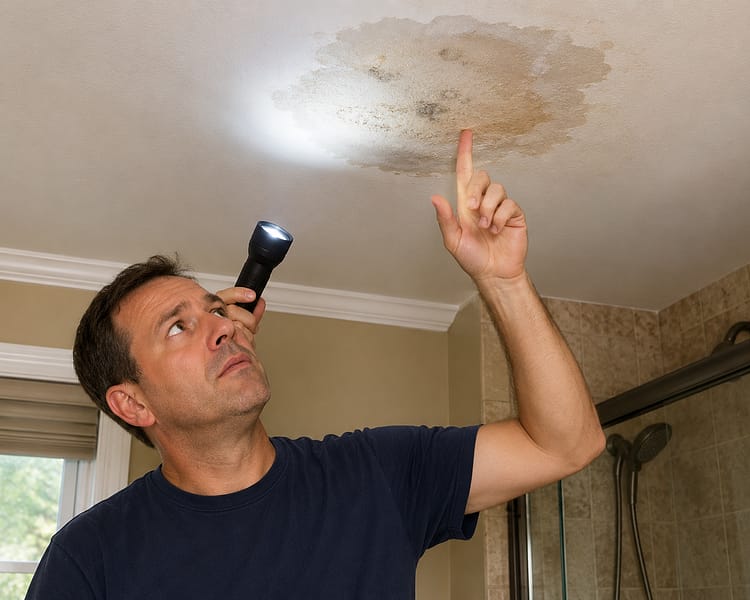
A pinhole drip behind a vanity or a wet ceiling spot under an upstairs bathroom can turn into expensive damage faster than most homeowners expect. The best tools for pipe leaks help you find the source early, confirm what is actually leaking, and avoid tearing into the wrong wall or replacing the wrong part.
The trick is knowing which tools are worth buying, which ones are only useful in certain situations, and when a leak has moved past DIY territory. After years in the field, I can tell you this: leak detection is rarely about one magic gadget. It is about using the right tool for the right clue.
What makes the best tools for pipe leaks useful
A good leak tool does one of three jobs. It helps you detect hidden moisture, narrow down the leak location, or verify the repair once the water is off and the line is fixed.
That matters because pipe leaks do not always show up where they start. Water travels. A stain on one side of a room may come from a supply line several feet away, a drain connection above, or even condensation that looks like a leak but is not one. The best tools save time by helping you separate symptoms from the actual source.
1. Flashlight
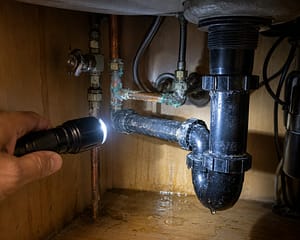
This sounds basic, but a strong flashlight is still one of the most important tools in leak work. Good lighting lets you catch mineral buildup, green corrosion on copper, rust tracks on steel, swollen cabinet floors, and tiny beads of water around fittings.
A phone light is better than nothing, but it is usually too weak and too wide. A focused LED flashlight helps you inspect under sinks, behind toilets, around water heaters, and inside access panels. If I had to choose only one first tool for a homeowner, this would be it.
2. Moisture meter
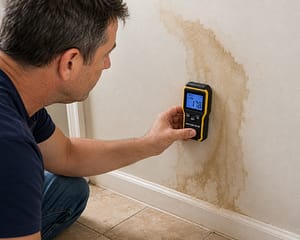
A moisture meter is one of the smartest buys if you are dealing with repeated wall stains, warped baseboards, soft drywall, or mystery damp spots. It measures moisture levels in materials like drywall, wood, and flooring, so you can tell whether an area is actively wet or just stained from a past issue.
This is where many people save themselves from unnecessary repairs. A moisture meter can tell you if the wettest point is directly below a shower valve, next to a supply line route, or spread across a larger area from a roof or window issue. It is not perfect, and it will not tell you exactly which pipe is leaking, but it gives you a much stronger starting point.
For homeowners, a pinless model is often easier to use on finished surfaces. Pin-type meters can be more precise in some cases, but they leave tiny holes.
3. Inspection camera
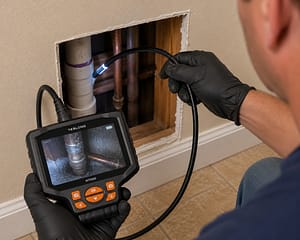
An inspection camera, sometimes called a borescope, is one of the best tools for pipe leaks when you need to look inside tight spaces without opening up a large section of wall. These cameras are especially useful under tubs, behind cabinets, inside ceiling cavities, and around pipe chases.
If you already have a small access opening, an inspection camera can save a lot of guesswork. You can check for active drips, water trails, mold growth, and damaged fittings. It also helps you verify whether the problem is on a supply line, drain line, or nearby fixture connection.
The trade-off is that these cameras only show what is within reach and line of sight. If insulation is packed in tightly or the leak is buried deep, the camera may not reveal much. Still, for many homes, it is a practical step between visual inspection and cutting drywall.
4. Water pressure gauge
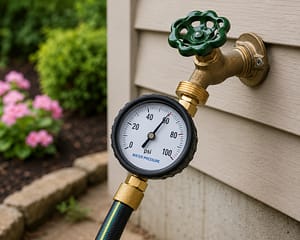
High water pressure is a hidden cause behind many recurring pipe leaks, especially at supply stops, washing machine hoses, ice maker lines, and older fittings. A simple water pressure gauge attaches to a hose bib or laundry connection and tells you whether your system pressure is too high.
If your pressure is above the safe range for the home, small weak points tend to fail faster. You may fix one leak only to see another appear months later. That is why a pressure gauge is not just for finding the current leak. It helps you catch the condition that may be causing repeated failures.
This tool is easy to use and affordable, but you need to test at the right location and understand the reading. Pressure that is too high can point to a bad pressure reducing valve or thermal expansion issue.
5. Adjustable wrench and channel-lock pliers
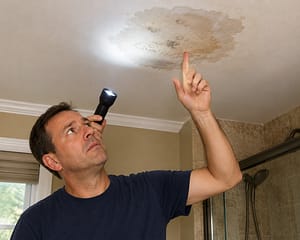
Detection gets the attention, but basic hand tools still matter because many visible leaks happen at threaded fittings, supply line nuts, shutoff valves, and trap connections. A quality adjustable wrench and a pair of channel-lock pliers help you tighten, loosen, and replace leaking parts without damaging them.
The important part is control. Too many DIY leaks get worse because someone overtightens a nut and cracks a fitting, twists a valve body, or distorts a compression connection. Good hand tools let you hold one side steady while turning the other, which is how many plumbing connections should be handled.
These are not specialty leak tools, but they belong in any practical leak kit because finding the problem is only half the job.
6. Pipe cutter
If the leak is in an exposed copper, CPVC, or PEX line and the repair calls for cutting out a damaged section, a proper pipe cutter matters. Using the wrong cutting tool can leave rough edges, deform the pipe, or create a bad connection when you install the replacement.
For copper, a tubing cutter gives a clean cut. For plastic pipe, use a cutter made for that material. PEX needs a clean, square cut to seal properly with the fitting system you are using.
This tool is only useful if you are comfortable doing the repair itself. If the leaking pipe is in a wall, overhead, near electrical work, or part of an older brittle system, that is usually the point where professional help is the safer move.
7. Infrared thermometer or thermal camera
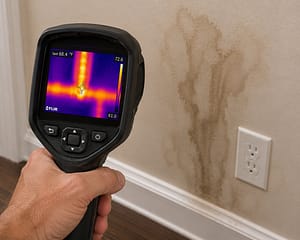
An infrared thermometer can help you compare surface temperatures and spot unusual cooling or warming that suggests hidden water movement. A thermal camera takes that a step further by showing temperature patterns across a wall or ceiling.
These tools are helpful, but they are also the easiest to misunderstand. A cool spot on drywall might mean a cold water line leak, but it could also mean air movement from a duct or poor insulation. A warm area may point to a hot water line issue, or it may be solar heat from the outside wall.
For that reason, I treat thermal tools as confirmation tools, not final proof. They work best when paired with a moisture meter and a visual inspection.
8. Listening device or acoustic leak detector
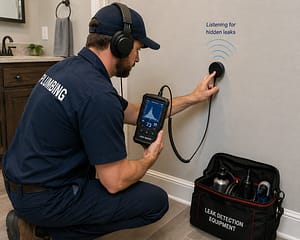
Professional plumbers often use acoustic equipment to hear water escaping under pressure, especially in slab leaks or concealed lines. For homeowners, simpler listening devices are available, though they are not always easy to interpret if you have no experience.
When they help, they really help. A pressurized leak can create a distinct hiss or rushing sound behind a wall or under a floor. But homes are noisy. Appliances cycle on, pipes expand, and outdoor sounds transfer into the structure. That makes this more of an advanced tool than a beginner one.
If you suspect a slab leak or a hidden pressurized line and other tools are not giving clear answers, this is often where calling a trained plumber makes more sense than buying more gear.
9. Wet-dry vacuum
A wet-dry vacuum does not detect leaks, but it is one of the best support tools to have once a leak is found. It helps remove standing water from cabinets, under sinks, around water heaters, and from minor floor flooding so you can inspect the area better and reduce immediate damage.
It also helps during repairs. Clearing water from a line or catch pan makes the work cleaner and helps you tell whether fresh water is still entering the area after the shutoff.
Which tool should you buy first?
If you are building a practical homeowner setup, start with a flashlight, moisture meter, adjustable wrench, channel-lock pliers, and a wet-dry vacuum if you have space for one. That combination covers the majority of common household leak situations without spending money on tools you may only use once.
If your home has recurring mystery leaks, add an inspection camera next. If you have older plumbing or frequent fixture failures, a water pressure gauge is a smart addition.
Thermal cameras and acoustic devices can be useful, but they make more sense when you are dealing with harder-to-find leaks or you want to go deeper into troubleshooting. That is where experience starts to matter more than the tool itself.
When the best tools for pipe leaks are not enough
Some leaks need more than homeowner tools. If the leak is inside a slab, behind tile, inside a multi-unit wall assembly, near electrical wiring, or causing major damage, the safest move is to bring in a pro. The same goes for any leak you cannot isolate, any active ceiling leak, or any situation where shutting off one valve does not stop the water.
At that point, the real value is not just better equipment. It is knowing how to read the signs correctly and avoid opening the wrong area. That is a big part of how Ainstheplumber approaches leak work in the field and in homeowner education – practical tools are important, but good decisions matter just as much.
The right tool can save you money, but the right diagnosis saves you from chasing the same leak twice. Start simple, verify what you are seeing, and if the evidence does not line up, trust that instinct before you start cutting into walls.
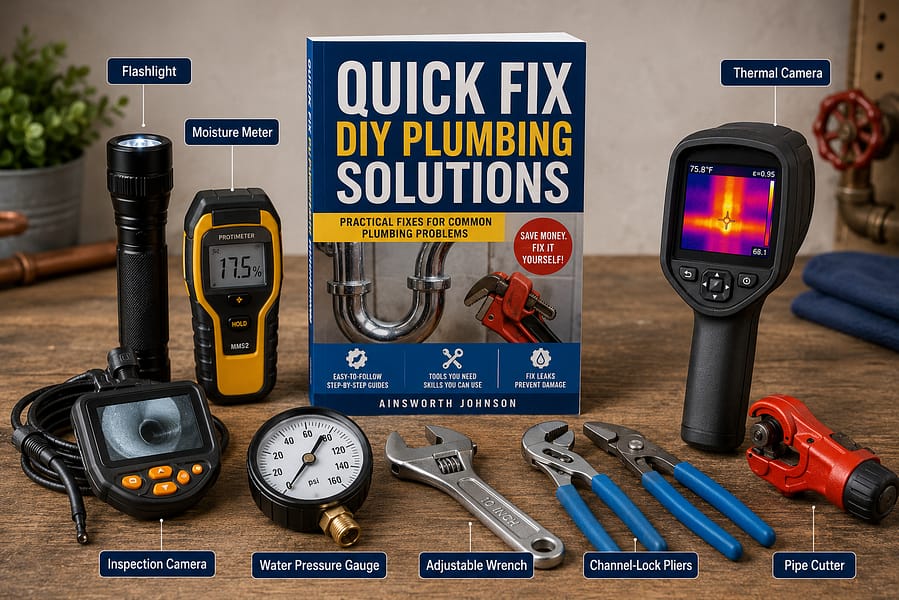
Recommended Tools & Plumbing Guide
As a plumber with over 20 years of experience, I’ve seen how the right tools can make the difference between a quick fix and major damage. I’ve put together a list of trusted plumbing tools and leak detection products that homeowners can use to catch problems early and protect their homes.
👉 Browse my recommended tools and products here
📘 Get my practical plumbing guide:
https://www.amazon.com/dp/B0F9ZZJCJG
— Ainsworth Dickenson
Your Go-To Plumbing Expert