Disclosure: As an Amazon Associate, I may earn from qualifying purchases.
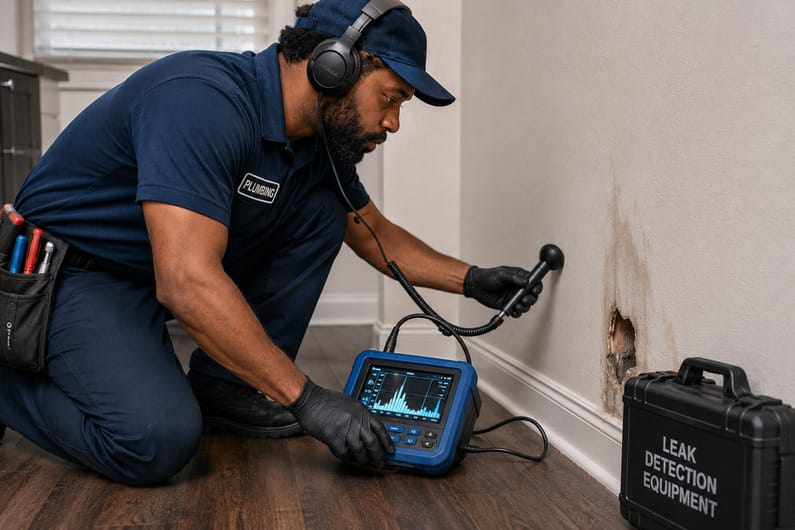
A high water bill with no clear cause usually means one thing – water is escaping somewhere you cannot see. That is where professional leak detection techniques make a real difference. Instead of opening walls at random or guessing which pipe is failing, a trained plumber uses a methodical process to narrow down the problem, confirm the source, and choose the least destructive repair path.
For homeowners, renters with maintenance responsibility, and property managers, the biggest mistake is treating leak detection like a guessing game. A small leak behind a shower wall can stain drywall, rot framing, grow mold, and keep running long before it becomes obvious. The sooner the leak is identified correctly, the more options you usually have.
Why professional leak detection techniques matter
A hidden leak is rarely just a plumbing problem. It can become a flooring, electrical, mold, or structural problem. The cost of the water itself is often the smallest part of the damage.
Professional leak detection techniques help avoid that chain reaction because they are designed to answer three questions in the right order: Is there really an active leak, where is it located, and what type of line or fixture is involved? That order matters. If you skip straight to cutting tile or breaking concrete, you can turn a repair into a much bigger project than it needed to be.
There is also a difference between detecting a leak and seeing its symptoms. Wet drywall under a bathroom does not always mean the drain line below it is cracked. It could be a failed shower pan, a loose toilet seal, a pinhole in a supply line, or water entering from outside. Good detection work separates the cause from the evidence.
The first step is pressure and pattern analysis
Before using specialized tools, an experienced plumber starts with clues. Water meter movement, pressure loss, fixture behavior, staining patterns, and the timing of the leak all help narrow the field.
Water meter testing
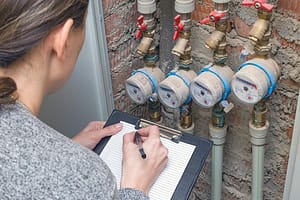
One of the most reliable starting points is the water meter. If every fixture is off and the meter is still moving, that strongly suggests an active leak on the pressurized side of the system. This simple test can save time because it tells you whether to focus on supply piping, irrigation, or another constant-use source.
In some cases, the leak is slow enough that the movement is subtle. A plumber may shut down sections of the system to isolate whether the issue is inside the building, in the yard, or on a specific branch line. That kind of isolation work is basic, but it is one of the most useful professional habits in the trade.
Pressure testing sections of the plumbing system
Pressure testing is often used when a leak is suspected but not visible. The idea is straightforward: isolate a line, apply controlled pressure, and see whether it holds. If pressure drops, there is a leak somewhere in that section.
This method is especially helpful in remodels, slab leak investigations, and situations where multiple lines run close together. The trade-off is that pressure testing tells you a leak exists, but not always the exact spot. It usually works best when paired with acoustic tools, thermal imaging, or visual inspection.
Acoustic listening is one of the most effective professional leak detection techniques
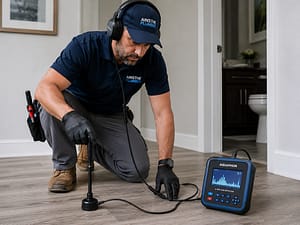
Pressurized water escaping from a pipe creates sound and vibration. Professional acoustic leak detection tools are built to pick up those signals through flooring, walls, soil, and concrete. A trained plumber listens for changes in tone, intensity, and location rather than just listening for noise.
Acoustic leak detectors and listening devices
On a supply leak, the sound may be a steady hiss, a rushing noise, or a sharper vibration, depending on pipe material, pressure, and the size of the opening. Copper, PEX, and galvanized piping all transmit sound differently. A slab foundation changes the reading too.
This is where experience matters. The tool is helpful, but the plumber still has to interpret what it hears. Nearby traffic, pumps, appliances, and outdoor wind can interfere. In a quiet setting, acoustic equipment can pinpoint a hidden leak with impressive accuracy. In a noisy building or commercial setting, it may need support from other methods.
Thermal imaging helps track moisture paths
Infrared cameras do not directly see water. They detect temperature differences on a surface. That sounds like a small distinction, but it matters because moisture often changes surface temperature enough to reveal a hidden pattern.
When thermal cameras work well
A cold supply leak behind drywall may show a cooler area spreading beyond the visible stain. A hot water leak under the flooring may show a warmer line where the pipe runs. Around showers, windows, and exterior walls, thermal imaging can help determine whether moisture is coming from plumbing or from outside intrusion.
The limitation is that thermal imaging is a confirmation tool, not magic. Insulation, ambient temperature, dense materials, and old moisture can all affect what the camera sees. A thermal image should guide the next step, not replace proper testing.
Moisture meters confirm what the eye cannot
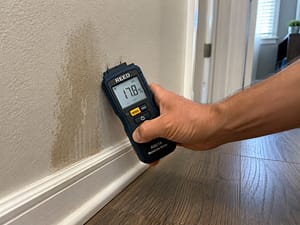
Once a wall, floor, or ceiling is suspected, a moisture meter helps verify the extent of the problem. This is one of the simplest yet most useful tools for leak detection because it provides a measurable reading rather than relying on appearance alone.
A stained area may be dry from an old leak, while a nearby clean-looking section may still be wet. Moisture mapping lets a plumber track where water has migrated and identify the likely source area. It also helps determine how much material may need to be opened or dried after the repair.
For property owners, this matters because the visible damage is not always the full extent of the damage. Water often travels along framing, under cabinets, or across slab surfaces before it shows itself.
Camera inspections are essential for drain and sewer leaks
Not every leak comes from a pressurized water line. Drain leaks, sewer line defects, and vent-related issues can be harder to catch because they may only show up when a fixture is used.
Video inspection for waste lines
A drain camera allows the plumber to inspect inside the pipe for cracks, separated joints, root intrusion, corrosion, or blockages that are causing water to back up and escape. In older properties, this can quickly reveal whether the real issue is a failed section of line rather than a fixture above.
Video inspection is especially useful when there is recurring odor, slow drainage, unexplained wet soil, or water damage that appears only after sinks, tubs, or washing machines are used. It provides direct visual evidence, making repair decisions much easier.
Dye testing and fixture isolation still have a place
Some of the best professional leak detection techniques are low-tech. Dye testing toilets, shower pans, tubs, and drains can reveal leaks that occur only during use. Fixture isolation can indicate whether a leak is tied to a single bathroom, an appliance, or a branch line.
Toilet leaks are a good example. A toilet may not leak continuously onto the floor, but a bad flapper can quietly waste a surprising amount of water into the bowl. A failed wax ring may only leak when the toilet is flushed. A cracked shower pan may only leak when someone is standing in a certain spot. Testing each condition separately is what prevents misdiagnosis.
Slab leaks require careful confirmation
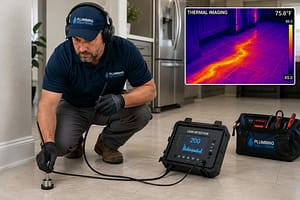
Slab leaks are one of the situations homeowners worry about most, and for good reason. The signs can be subtle at first: warm spots on the floor, unexplained water use, sound of running water, cracked flooring, or moisture along baseboards.
A proper slab leak investigation usually combines meter testing, line isolation, acoustic listening, and sometimes thermal imaging. No single tool should be trusted on its own. Concrete, tile, reinforcement, and nearby utilities can all distort the evidence.
This is also where restraint matters. A good plumber does not start breaking up the slab based on one clue. The goal is to gather enough confirmation to open the smallest possible area, or, in some cases, recommend rerouting the line rather than opening the slab at all. It depends on pipe condition, access, and long-term repair value.
When homeowners should call a professional
If the leak is visible under a sink or at a shutoff valve, you may be able to temporarily fix it by turning off the water and replacing a simple part. But hidden leaks are different. Once water is inside walls, ceilings, floors, or concrete, guesswork gets expensive fast.
Call a professional when the water bill jumps without explanation, the meter moves when everything is off, stains keep returning, moldy odors appear, the flooring starts warping, or you hear water running with no fixture in use. Those are all signs that the problem may be active and concealed.
For homeowners who want to learn more before calling for service, the right educational guidance helps you ask better questions and avoid wasted repairs. That is part of what makes Ainstheplumber useful: practical, field-based advice that helps you understand what is happening before the damage spreads.
The best leak detection work is not about fancy tools alone. It is about using the right test in the right order, reading the evidence carefully, and fixing the root cause rather than chasing symptoms. When that happens, you spend less on damage, less on unnecessary demolition, and a lot less time wondering where the water is coming from.
Recommended Tools & Plumbing Guide
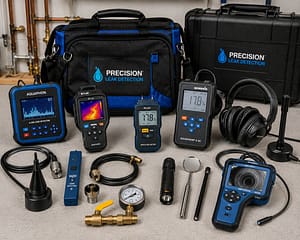
As a plumber with over 20 years of experience, I’ve seen how the right tools can make the difference between a quick fix and major damage. I’ve put together a list of trusted plumbing tools and leak detection products that homeowners can use to catch problems early and protect their homes.
👉 Browse my recommended tools and products here
📘 Get my practical plumbing guide:
https://www.amazon.com/dp/B0F9ZZJCJG
— Ainsworth Dickenson
Your Go-To Plumbing Expert