Disclosure: As an Amazon Associate, I may earn from qualifying purchases.
A wet patch in the yard that never dries, a sudden drop in water pressure, or a water bill that jumps for no clear reason – these are usually not small problems. When you need water line repair Sint Maarten, speed matters because underground leaks can waste a lot of water and damage foundations, driveways, and landscaping before the source is obvious.
Most property owners do not think about their water line until something goes wrong. That makes sense. The pipe is out of sight, and if water is still coming from the tap, it is easy to assume the issue can wait. In the field, that delay is when costs start to climb. A water line problem often gets more expensive the longer it is ignored, especially in properties with older piping, shifting ground, or high daily water demand.
What a main water line problem looks like
Your water line is the pipe that brings fresh water from the supply side into your home or building. If that line develops a crack, loose fitting, corrosion hole, or partial collapse, the symptoms can show up inside, outside, or both.

Inside the property, the most common sign is reduced water pressure at multiple fixtures. If only one faucet is weak, that is usually a local issue. If the kitchen sink, shower, and outdoor hose bib all seem weaker at the same time, the problem may be farther upstream. You may also hear hissing or running water when nothing is on, or notice cloudy water if the line has been disturbed.
Outside, signs are often easier to miss at first. You might see one section of yard staying soft, greener grass in a narrow strip, soil shifting near the line path, or water collecting near the meter box. In paved areas, leaks can appear as cracks, sinking sections, or moisture pushing through joints.
Common causes behind water line repair Sint Maarten
Water line repair in Sint Maarten is not always about a single dramatic burst pipe. More often, the damage builds over time and reaches a point where it can no longer be ignored.
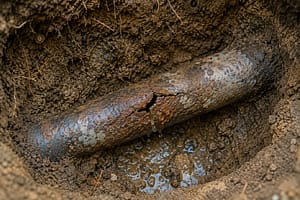
One common cause is age. Older metal lines can corrode from the inside or outside, depending on water quality, soil conditions, and the type of pipe installed. As the pipe wall thins, even normal pressure can expose weak spots.
Ground movement is another factor. Soil does not stay perfectly still. Settlement, construction vibration, traffic loads, and past excavation work can all stress buried pipes. A line may separate at a joint, crack at a bend, or shift enough to create a slow leak.
Poor installation also shows up years later. Shallow burial, unsupported sections, bad fittings, and low-quality repair work tend to fail earlier. In some properties, previous patch repairs were done just well enough to stop the leak for the moment, not to solve the real problem long term.
Then there is pressure. High water pressure feels great in the shower, but it puts more strain on the system. If a line already has corrosion or a weak connection, pressure fluctuations can push it over the edge.
What to do first if you suspect a leak
The first step is simple – do not guess based on one symptom alone. A higher bill could mean trouble with irrigation. Low pressure could be a clogged fixture. But when several warning signs appear together, take them seriously.
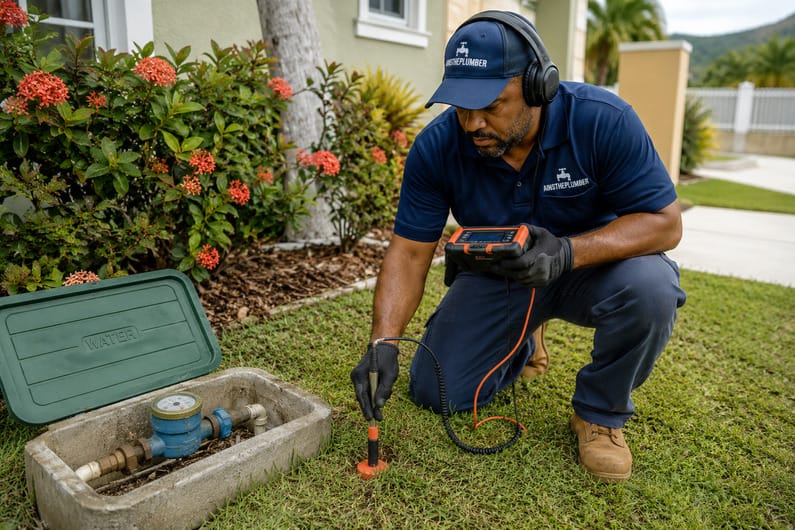
Start by checking whether the issue affects the whole property. Run water at different fixtures and compare the pressure. Then look around the meter area and any visible line path for standing water, muddy spots, or unexplained saturation.
If you can safely access your water meter, watch the leak indicator with all fixtures turned off. If the indicator is moving, water is going somewhere. That does not automatically confirm the main line, but it indicates an active flow where there should not be one.
If the leak appears significant, shut off the main water supply. This limits damage while you figure out the next step. For homeowners, that is often the smartest move before digging, cutting, or trying a temporary fix that may make the repair harder later.
Can you handle any part of it yourself?
This depends on where the problem is and how confident you are with plumbing work. If the issue is at an exposed section near the house with a visible shutoff and enough working room, some experienced DIYers may be able to identify the damaged fitting or pipe material. But most buried water line problems are not good beginner repairs.
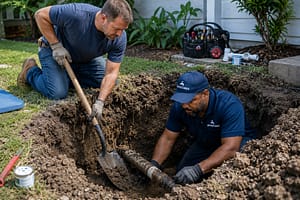
The biggest mistake people make is treating an underground line like a simple above-ground leak. Digging without locating the full pipe route can damage the line more or hit nearby utility paths. Another mistake is patching one visible failure on a line that is already deteriorated in multiple places. The leak stops for a week or a month, then a second failure shows up right beside it.
If you are not sure whether the line needs a spot repair or a larger replacement, that is usually the point where professional leak detection and diagnosis save money rather than add cost.
How professional water line repair Sint Maarten usually works
A proper repair starts with confirming the leak location, not just chasing wet ground. In real job conditions, water travels. The wet area is not always directly above the break. That is why experienced plumbers use pressure testing, visual inspection, and leak detection methods before opening the ground.
Once the damaged section is located, the next decision is whether the pipe can be repaired reliably or whether replacement is the better investment. A short, isolated crack on a newer line may justify a direct repair. A corroded, older line with repeated failures usually indicates the need to replace a larger section or, in some cases, the entire line.
The pipe material matters here. Copper, galvanized steel, PVC, CPVC, PEX, and polyethylene all have different repair approaches. What works well on one pipe type may be a poor choice on another. Soil condition, depth, accessibility, and whether the line runs under concrete also affect the final method.
That is why water line repair in Sint Maarten is rarely a one-price-fits-all service. Two leaks can look similar from the surface and require very different work once the line is exposed.
Repair or replace – how to make the right call
Many property owners naturally want the cheapest immediate fix. Sometimes that is reasonable. Sometimes it just delays a bigger bill.
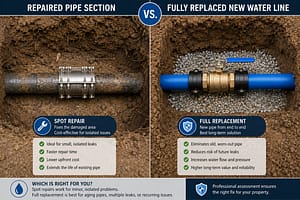
If the line is fairly new, the damage is isolated, and the rest of the pipe is in good condition, a targeted repair often makes sense. It is faster, less disruptive, and lower in cost.
If the line is older, leaking in more than one area, made from outdated material, or showing signs of corrosion and poor past repairs, replacement may be the smarter long-term decision. You spend more now, but you reduce the chance of repeated excavation, repeated labor, and water loss over the next few years.
The right answer depends on the system’s age, the pipe material, your property layout, and how long you plan to keep the building. Property managers and commercial operators often choose the longer-lasting option because downtime costs them more than the repair itself.
How to prevent another water line failure
No buried line lasts forever, but you can reduce the chance of surprise failure. Pay attention to pressure issues early. If pressure is unusually high, have it checked. If your water bill changes without explanation, investigate before the problem grows.
Know where your main shutoff is and make sure responsible occupants can access it fast. If you manage a rental or commercial property, that one step alone can reduce damage during an emergency.
It also helps to keep records. If you had one underground repair, note the pipe material, location, date, and what was done. That history matters when future troubleshooting comes up. A good plumber can read that pattern and tell whether you are dealing with a one-time issue or the beginning of a larger failure.
For local property owners, working with an experienced service that understands real leak detection, repair methods, and what tends to fail in the area makes a difference. Ainstheplumber approaches these jobs with that practical mindset – find the actual problem, repair what makes sense, and avoid shortcuts that create another callout later.
Water line problems are stressful because they are hidden until they are not. The good news is that the early warning signs are usually there if you know what to watch for, and acting early almost always gives you better options than waiting for a full failure.
Recommended Tools & Plumbing Guide
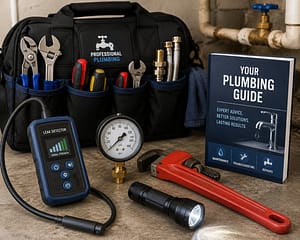
As a plumber with over 20 years of experience, I’ve seen how the right tools can make the difference between a quick fix and major damage. I’ve put together a list of trusted plumbing tools and leak detection products that homeowners can use to catch problems early and protect their homes.
👉 Browse my recommended tools and products here
📘 Get my practical plumbing guide:
https://www.amazon.com/dp/B0F9ZZJCJG
— Ainsworth Dickenson
Your Go-To Plumbing Expert