Pour Grease Down the Sink. Additionally, the pan is still warm, and a small amount of grease sits at the bottom.
Pour Grease Down the Sink may seem like the easiest way to dispose of it.
Instead, let it cool and collect it in a container.
Then recycle or throw the solidified grease away.
But should you pour grease down the sink?
The simple answer is no.
Cooking grease, fats, and oils can create stubborn buildup inside kitchen drainpipes. What goes down as a warm liquid often doesn’t remain a liquid as it travels through your plumbing. Pour Grease Down the Sink could worsen clogs if not disposed properly.
As grease cools, it coats the inside of the drainpipe. Food particles and other debris can then stick to that coating. This buildup slows water flow and invites odors. Ignoring it can lead to costly clogs later. This small habit saves plumbing and odors.
To avoid problems, never Pour Grease Down the Sink. Instead, let grease solidify and dispose of it in the trash. If you must flush pans, wipe them first and keep sinks clear. Consult a plumber for persistent backups.
Disclosure: As an Amazon Associate, I may earn from qualifying purchases.
The better approach is to keep grease out of the drain in the first place.

What Happens When You Pour Grease Down the Sink?
One of the reasons grease causes so much confusion is that it often disappears down the drain without an immediate problem.
You pour it in.
The sink drains.
Nothing backs up.
So everything seems fine.
The problem may be developing farther inside the plumbing.
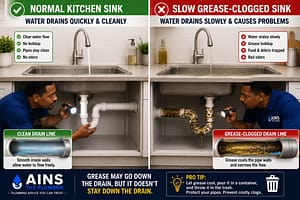
Warm grease can travel through the P-trap and into the branch drain. As it cools, some of it may cling to the pipe walls. Repeated disposal can create layers of greasy buildup.
Now add everyday kitchen waste.
Small food particles, soap residue, and other debris passing through the drain can become trapped in the greasy coating. The buildup gradually reduces the pipe’s usable diameter.
Eventually, water doesn’t move through as freely as it once did.
That’s when you may begin noticing:
- Water draining more slowly
- Gurgling from the kitchen sink
- Unpleasant drain odors
- Water standing in the sink
- Repeated kitchen drain clogs
- A clog that returns soon after being cleared
A grease-related blockage doesn’t necessarily happen because of one pan. It can develop from a habit repeated over months or years.

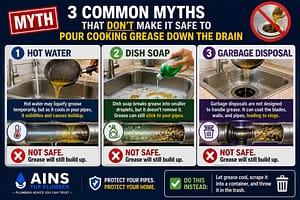
Does Hot Water Make It Safe to Pour Grease Down the Sink?
This is one of the most common plumbing myths.
You may have heard:
“Just run plenty of hot water while pouring the grease down the drain.”
Hot water may keep grease liquid temporarily, but it doesn’t eliminate the grease.
The mixture eventually travels into cooler sections of the drainage system. As temperatures drop, fats can thicken or solidify and begin sticking to the piping.
In other words, hot water can simply help move the problem farther down the drain.
That can actually make the eventual blockage more difficult to reach.
So don’t use hot water as permission to dispose of grease through the sink.
What About Dish Soap and Grease?
Another common idea is that dish soap breaks grease down enough to make sink disposal safe.
Dish detergent certainly helps remove grease from dishes, cookware, and utensils by helping oils mix with wash water.
But that doesn’t mean intentionally pouring large quantities of cooking grease into your drainage system becomes a good plumbing practice.
Once that mixture travels through a long drainage system, conditions change. The grease hasn’t magically ceased to exist.
Use dish soap for washing normal residue from dishes—not as a method for disposing of leftover cooking grease.
Can You Pour Cooking Oil Down the Sink?
Liquid cooking oil may seem different from grease that becomes solid at room temperature, but deliberately pouring cooking oil down the sink is still a poor habit.
Oil can contribute to coating and buildup inside drainage piping, especially when combined with food particles and other fats.
The safest rule for homeowners is simple:
Keep fats, oils, and grease out of the kitchen drain whenever practical.
That includes things such as:
- Bacon grease
- Cooking fat
- Frying oil
- Meat drippings
- Butter and shortening
- Greasy sauces
- Large amounts of oily leftovers
Small traces left on dishes are unavoidable. We’re talking about deliberately using the kitchen drain as a disposal method.
Does a Garbage Disposal Protect Your Drain From Grease?
No.
A garbage disposal can grind certain food scraps into smaller pieces, but it doesn’t make grease disappear.
In fact, combining ground food particles with grease can contribute to exactly the kind of buildup you’re trying to prevent.
Think of the garbage disposal as a food-grinding appliance, not a substitute for a trash container and certainly not a grease-disposal system.
Keeping grease and unnecessary food waste out of the drain gives your kitchen plumbing a much better chance of staying clear.

What Should You Do With Cooking Grease Instead?
The correct disposal method depends somewhat on the type and quantity of grease and your local waste rules.
For a small amount of grease that will solidify, allow it to cool safely and place it in a disposable container before putting it into the appropriate household waste.
An empty jar, can, or other suitable container can help keep the grease contained.
For a greasy frying pan, you can also allow the pan to cool and wipe excess grease away with a paper towel before washing it.
Larger quantities of used cooking oil may be handled differently. Some communities have collection or recycling programs, so check your local waste-disposal guidance.
The important plumbing principle is:
Dispose of grease through an appropriate waste method—not through your kitchen plumbing.
What If You Already Poured Grease Down the Sink?
Don’t panic because you accidentally poured grease into the sink once.
One mistake doesn’t automatically mean you now have a blocked drain.
What you should not do is turn it into a regular habit.
Pay attention to how the kitchen sink drains over the following days and weeks. Water draining slowly, accompanied by gurgling or odors, may indicate buildup inside the line.
If the sink is currently draining normally, focus on prevention from this point forward.
If the drain is already slow, don’t keep pouring different chemicals or homemade mixtures into it hoping one will dissolve everything.
Start by determining whether the problem is limited to the kitchen sink or whether other fixtures are also draining slowly.
If your kitchen sink is already draining slowly, learn how to unclog a sink drain safely before a minor restriction becomes a complete blockage.
Can You Remove a Grease Clog Yourself?
That depends on where the blockage is and how severe it has become.
A minor restriction near the fixture may sometimes respond to basic mechanical cleaning. Removing and cleaning an accessible P-trap, using the correct plunger, or carefully using an appropriate drain snake may solve some local blockages.
But there is an important distinction:
Clearing enough material to make water drain again isn’t necessarily the same as thoroughly cleaning the pipe.
If grease has coated a longer section of the drain line, opening a small pathway through the blockage may provide temporary relief while significant buildup remains.
That’s one reason some kitchen clogs keep coming back.
Different blockages require different approaches, so compare my 7 Best Drain Cleaning Methods That Work before choosing another drain-cleaning method.
Should You Use Chemical Drain Cleaner on a Grease Clog?
Chemical drain cleaners may sound like an easy answer, but they aren’t my first recommendation for diagnosing a grease-related kitchen blockage.
A chemical may not remove the full buildup, and repeated or improper use can introduce additional risks depending on the product, piping material, blockage, and what else is already inside the drain.
There’s another practical concern.
If the chemical doesn’t clear the blockage, someone may later need to open the trap or mechanically work on a drain containing caustic chemicals.
For homeowners, mechanical methods and proper diagnosis are generally a better starting point than repeatedly adding chemicals to an unknown blockage.
If you’re not sure what is causing the clog, find out before throwing more products into the drain.

When a Grease Clog May Be Deeper in the Drain Line
One slow kitchen sink doesn’t automatically mean the main sewer is clogged.
Location matters.
If only the kitchen sink is affected, the restriction may be in the fixture drain, P-trap, or kitchen branch line.
But pay attention if:
- Several fixtures are draining slowly
- Water backs up into another fixture
- Drains gurgle when another fixture is used
- The kitchen clog repeatedly returns
- Mechanical cleaning doesn’t restore proper drainage
- There is a history of grease entering the drain
Those symptoms can indicate that the problem is farther downstream than the sink itself.
At that point, repeatedly working on the P-trap isn’t addressing the real problem.
A plumber may need to evaluate the branch drain or larger drainage system and determine the appropriate cleaning method.
Why Grease Problems Can Be Worse in Commercial Kitchens
Residential kitchens aren’t the only places where grease matters.
Restaurants and other commercial food operations produce much larger quantities of fats, oils, grease, and food waste. Those drainage systems may require grease-control equipment and more structured maintenance.
Your existing commercial plumbing guidance notes that grease and food waste can accumulate quickly in commercial kitchen drains.
For restaurant owners, property managers, and other business readers:
Commercial kitchens face a different level of drain demand, so business owners can also learn more about commercial plumbing services in Sint Maarten.

How to Prevent Grease From Clogging Your Kitchen Drain
Preventing grease buildup is much easier than removing a mature grease blockage.
Make these habits part of your kitchen routine:
- Never intentionally pour cooking grease down the sink.
- Allow fats to cool before disposing of them appropriately.
- Wipe greasy pans before washing them.
- Scrape food scraps into the appropriate waste container.
- Don’t rely on the garbage disposal to handle grease.
- Pay attention when the sink begins draining more slowly than normal.
- Deal with recurring drainage problems instead of repeatedly treating the symptom.
These habits cost almost nothing, but they can help prevent one of the most frustrating kitchen plumbing problems.
Frequently Asked Questions About Pouring Grease Down the Sink
Can I pour grease down the sink if I run hot water?
It’s better not to. Hot water may temporarily keep some grease flowing, but it doesn’t remove the grease from the drainage system. The material can cool farther along the pipe and contribute to buildup.
Can I pour grease down the sink with dish soap?
Dish soap helps clean normal grease residue from cookware, but it shouldn’t be used as a justification for deliberately pouring leftover cooking grease into the drain.
Is a small amount of grease okay?
Small traces left after wiping or washing cookware are difficult to avoid. The important habit is to avoid deliberately disposing of collected grease, fat, or cooking oil through the sink.
Will a garbage disposal get rid of grease?
No. A garbage disposal grinds food waste; it doesn’t eliminate grease.
Why does my kitchen sink keep clogging?
Recurring clogs can result from grease buildup, food debris, improper drain use, a poorly cleaned line, or a blockage farther down the branch drain. If you repeatedly clear the sink and the problem returns, further investigation is worthwhile.
When should I call a plumber?
Consider professional help when the clog repeatedly returns, mechanical methods don’t restore drainage, multiple fixtures are affected, or you’re unable to determine where the restriction is located.

The Bottom Line: Don’t Pour Grease Down the Sink
The kitchen sink makes grease disposal convenient—but convenience today can create a drain problem later.
Grease can coat the inside of drainpipes, trap food and debris, restrict water flow, and eventually contribute to stubborn or recurring clogs.
Remember the simple rule:
Cool it. Contain it. Dispose of it properly. Don’t pour it down the sink.
If your kitchen drain is already showing signs of trouble, don’t wait until standing water makes the sink unusable. Address slow drainage early and determine whether you’re dealing with a simple local clog or a larger drain-line problem.
Good plumbing maintenance isn’t only about knowing how to repair something after it fails. It’s also about knowing which everyday habits prevent the problem from developing in the first place.
Recommended Tools & Plumbing Guide
As a plumber with over 20 years of experience, I’ve seen how the right tools can make the difference between a quick fix and major damage. I’ve put together a list of trusted plumbing tools and leak detection products that homeowners can use to catch problems early and protect their homes.
👉 Browse my recommended tools and products here
📘 Get my practical plumbing guide:
https://www.amazon.com/dp/B0F9ZZJCJG
— Ainsworth Dickenson
Your Go-To Plumbing Expert