A water heater rarely fails at a convenient time. One day the shower runs cold, the next you find a puddle near the tank or hear a popping sound from the utility room. The water heater problems every homeowner should understand are not all emergencies, but knowing the difference can prevent a small repair from becoming a flooded room, a high utility bill, or a complete replacement.
The first rule is simple: do not ignore changes in hot-water performance. A water heater works under heat and pressure every day. Whether yours is a tank-style gas unit, an electric model, or a tankless system, early warning signs deserve attention.
Disclosure: As an Amazon Associate, I may earn from qualifying purchases
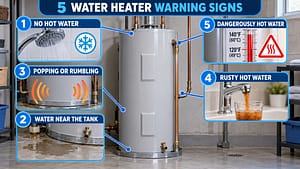
No Hot Water or Not Enough Hot Water
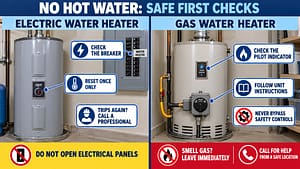
No hot water calls for a different first check depending on the type of heater. For an electric tank water heater, look at the electrical panel first. A tripped breaker may be the issue. Reset it once, but if it trips again, stop there. Repeated tripping can point to a bad heating element, wiring problem, or electrical fault that needs professional diagnosis.
For a gas water heater, check whether the pilot light is lit if your unit uses one. Modern units may have electronic ignition instead. If there is no flame, follow the lighting instructions printed on the unit. Never improvise with a lighter or bypass a safety control. If you smell gas, leave the area, avoid switches or open flames, and contact your gas provider or a qualified professional from a safe location.
If you have some hot water but it runs out much faster than usual, sediment, a failed heating element, an incorrect thermostat setting, or a tank that is too small for household demand may be responsible. A growing family, more frequent laundry, or a new high-flow shower can expose a capacity issue that was not obvious before. Raising the temperature is not always the answer. Water above 120 degrees Fahrenheit increases scald risk, especially for children and older adults.
Water Heater Problems Every Homeowner Should Watch for Around the Tank
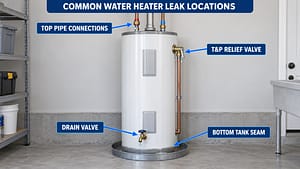
A leak near the water heater needs a careful inspection before anyone calls it a failed tank. Dry the floor and look again after the unit runs. Water may be coming from a loose pipe connection, the temperature and pressure relief valve, the drain valve, or condensation on a cold-water line.
A small drip from a fitting can often be repaired. Water leaking from the bottom seam of an older tank is more serious. That commonly means the inner tank has corroded. Once the tank itself leaks, replacement is usually the practical long-term solution. Sealants and quick patches do not repair a rusted inner tank operating under pressure.
If water is discharging from the temperature and pressure relief valve, do not cap or plug the valve. That valve is a safety device designed to release water if pressure or temperature becomes unsafe. The cause could be an overheating problem, excessive water pressure, a failed expansion tank, or a faulty valve. Turn off the heater if the discharge is heavy or continuous and have the system checked.
A pressure relief valve should also have a discharge pipe that terminates safely near the floor. That pipe should never be blocked, reduced in size, or directed where hot water can injure someone.
Rumbling, Popping, and Other Sounds

Popping or rumbling from a tank water heater is often caused by sediment at the bottom of the tank. Minerals in the water settle there over time. When the burner or lower element heats the tank, water trapped beneath the sediment turns to steam and creates those sharp popping sounds.
Sediment makes the heater less efficient and can shorten its service life. It is especially common in areas with hard water. A controlled tank flush can help if the drain valve is working and the unit has been maintained reasonably well. But there is a real trade-off with an older, neglected heater: opening an old drain valve can cause it to leak afterward, and moving sediment can reveal an existing weakness. If the tank is near the end of its expected life, get an experienced opinion before turning a routine flush into a replacement emergency.
A high-pitched whistling sound may come from a partially closed valve or a restriction in the water line. Ticking sounds can simply be pipes expanding and contracting as they heat. The key is whether the sound is new, growing louder, or paired with leaks, poor performance, or pressure issues.
Rusty, Smelly, or Discolored Hot Water
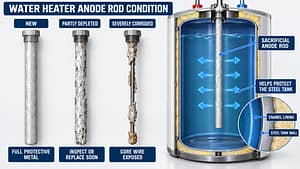
Rust-colored hot water can be confusing. If it comes from both hot and cold faucets, the problem may be in the water supply or aging pipes. If the discoloration appears only on the hot side, the water heater is a likely source.
Inside a tank water heater, the anode rod is designed to corrode before the steel tank does. It is one of the most overlooked parts of the system. Replacing a depleted anode rod early can extend tank life, but once the tank is badly corroded, it is too late for that maintenance step to help.
A rotten-egg smell in hot water often involves bacteria reacting with the anode rod, particularly in homes with well water or water that sits unused for long periods. The solution depends on the water chemistry and the heater setup. Sometimes a different anode rod helps. In other cases, disinfecting the system or addressing the water supply is necessary. Do not assume pouring chemicals into the tank is a safe fix without knowing what you are treating.
Hot Water That Is Too Hot
Water that suddenly becomes dangerously hot deserves prompt attention. Start by checking the thermostat setting. For most homes, 120 degrees Fahrenheit is a sensible target for safety and efficiency, though some households or local requirements may call for a different setup.
If the thermostat is already set correctly but the water is scalding, a thermostat or control may be failing. On an electric unit, a stuck heating element can continue heating the water. On gas models, control problems can produce similar results. Turn the unit off and arrange service rather than repeatedly testing the water at the faucet.
For homes with young children, seniors, or anyone with limited sensation, a thermostatic mixing valve can add a valuable layer of scald protection. It allows the tank to store hotter water while delivering tempered water to fixtures, but it must be installed and maintained correctly.
The Age Question: Repair or Replace?
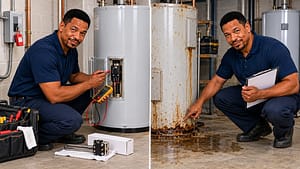
Most traditional tank water heaters last roughly 8 to 12 years, though water quality, maintenance, installation quality, and usage make a big difference. A well-maintained heater may last longer. A unit exposed to hard water or corrosive conditions may not.
Age alone does not mean replacement is required. A newer heater with a failed element, thermostat, valve, or anode rod may be worth repairing. But an older tank with internal corrosion, a bottom leak, and rising repair costs is usually telling you the answer.
Before choosing a replacement, consider more than the sticker price. Match the heater to your household’s actual hot-water demand, available fuel source, installation space, venting needs, and electrical capacity. Tankless systems can save space and provide long run times, but they may require gas-line, venting, or electrical upgrades. A larger tank provides more stored hot water, but it also costs more to heat if it is oversize.
Safe Checks Homeowners Can Make
Homeowners can safely watch for changes in water temperature, inspect visible connections for drips, check the surrounding area for moisture, and note unusual sounds or discolored water. Keep the area around the heater clear so leaks and service labels are easy to see.
Leave gas connections, burner assemblies, electrical access panels, relief-valve modifications, and major water-line repairs to a qualified professional. If you need to shut down a leaking tank, turn off its water supply valve first. For an electric unit, switch off power at the breaker before shutting off water. For a gas unit, use the gas control’s off setting according to the manufacturer instructions. If the leak is severe or you are unsure, protect the home first and call for help.
A water heater does not need to be mysterious. Pay attention to the first change, take the safe steps you understand, and bring in a professional before pressure, heat, or leaking water turns a manageable repair into property damage.
Recommended Tools & Plumbing Guide
As a professional plumber with over 20 years of experience, I have seen how the right tools, reliable products, and regular maintenance can help homeowners identify plumbing problems early and prevent unnecessary damage.
👉 Browse my recommended plumbing tools and products
🔧 Visit my Plumbing Solutions Store
Get My Practical Plumbing Guide
Build your plumbing knowledge and approach common household problems with greater confidence using Quick Fix DIY Plumbing Solutions.
Kindle Unlimited members may also read the eBook through their membership while it remains enrolled in KDP Select.
Ainsworth Dickenson
Professional Plumber & Author
AinsThePlumber