A pipe leak rarely announces itself.
How to Tell if a Pipe Is Leaking provides guidance.
Often, How to Tell if a Pipe Is Leaking starts with a damp cabinet floor near a wall.
If you are wondering How to Tell if a Pipe Is Leaking, pay attention to small changes. These changes can prevent structural damage, mold, or an expensive emergency.

Some leaks are obvious. However, How to Tell if a Pipe Is Leaking requires knowing which signs to check and which tests to run. A quick DIY inspection stops being enough in some cases.
How to Tell if a Pipe Is Leaking
The first signs to check.
Start with what your home is already telling you.
A leaking pipe usually leaves clues in one of three ways: visible water, sound, or changes in pressure. You can learn How to Tell if a Pipe Is Leaking to confirm what you notice in use. Usage patterns may also change.
Visible clues are the easiest to catch. You might notice water stains on a ceiling, bubbling paint, warped baseboards, or swollen wood. How to Tell if a Pipe Is Leaking helps you spot signs early. These clues indicate moisture patterns that require investigation.
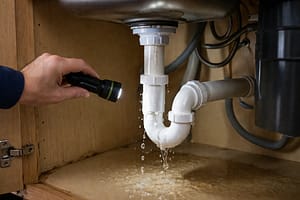
In addition, Under sinks, look for dampness around supply lines, drain connections, shutoff valves, and the cabinet floor. Also, around toilets, tubs, water heaters, washing machines, and dishwashers, even a small puddle matters. Regular checks help prevent costly damage and mold growth.
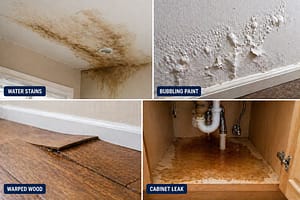
Sound can be just as useful. Additionally, if you hear dripping, hissing, or a faint rushing-water noise when no fixture is running, something is worth investigating. Also, if no fixture is running, listen carefully for leaks. In quiet hours, especially at night, hidden leaks are easier to hear.
Then there is water behavior.
A drop in water pressure at one fixture may point to a local problem.
Additionally, lower pressure throughout the property can suggest a bigger supply-side issue.
If your water bill jumps without a clear reason, that is often one warning of a leak.
It is an early sign you should investigate.
Additionally, a musty odor also deserves attention.
Moreover, water trapped behind walls or under floors often creates a stale smell before you see actual damage.
However, homeowners sometimes mistake that odor for humidity or poor ventilation, but plumbing leaks are a common cause.
Check your water meter before opening walls
One of the most reliable ways to confirm a hidden leak is with your water meter. Additionally, this test is simple and it can save you from guessing.
First, make sure no water is being used in the home. Then turn off faucets, ice makers, dishwashers, washing machines, irrigation, and anything else that draws water. Next, look at your meter and note the reading. If your meter has a leak indicator, watch it closely. Leave the water off for 30 minutes to an hour, then check again.
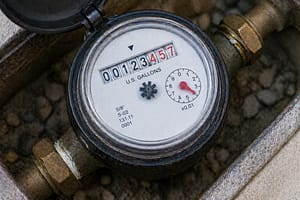
If the reading changed, water is moving somewhere.
That does not tell you exactly where the leak is.
Additionally, it confirms that you are not imagining the problem.
This test works best when everyone in the property knows not to use water during the check.
Additionally, in busy apartments or spaces, false readings happen when someone flushes a toilet or runs a sink mid-check.
Where pipe leaks usually show up
In real homes, leaks tend to occur in the same locations. Additionally, supply lines under sinks are common because fittings loosen, valves wear out, and flexible lines age. Toilet shutoff valves and supply tubes are another frequent trouble spot. Around water heaters, small drips at fittings can go unnoticed until corrosion builds up.
Drain pipes leak differently from pressurized supply pipes.
A drain leak may only show when a drain fixture is used.
The area can look dry most of the day.
Additionally, running water during your inspection matters.
Fill a sink, then drain it while watching the trap and joints.
Next, run the shower and check the ceiling below.
Finally, flush the toilet several times, then inspect the area around the base and the supply connection.
Washing machine hoses deserve special attention.
They often fail without much warning, especially older rubber hoses.
Refrigerator water lines, outdoor hose bibs, and pipes in crawl spaces or basements also cause plenty of hidden damage.
Additionally, they are not often inspected.
If your property is on a slab, the challenge is different.
A slab leak may show up as warm spots on the floor, unexplained moisture, or cracks.
Additionally, it may produce mildew odor or a steady increase in water use.
Those leaks are harder to confirm without proper equipment.
They usually call for a professional assessment sooner than later.
How to inspect for a hidden leak without over-complicating it
First, you do not need advanced tools to do a solid first inspection. Additionally, a flashlight, dry paper towels, and patience go a long way.
Start under every sink. Then, wipe all pipes and fittings dry, then run the faucet for several minutes. Next, pass a dry paper towel around each connection. Thus, a tiny bead of water will show up fast. Finally, do the same around shutoff valves and supply tubes.
Next, check ceilings under bathrooms, kitchens, and laundry areas. Additionally, stains, soft spots, or peeling paint often point to water traveling from above. Press gently if the area looks swollen, but do not push hard on badly damaged drywall.
Additionally, move to walls near plumbing fixtures.
Additionally, look for discoloration, warped trim, bubbling paint, or unexplained dampness.
Moreover, flooring matters too.
Additionally, loose vinyl, cupping wood, and cracked grout lines can signal water below the surface.
If you suspect a toilet leak, add a few drops of food coloring to the tank and wait without flushing.
If color appears in the bowl, the toilet is leaking internally.
That is not a pipe leak.
However, it can still waste a surprising amount of water and confuse your meter test.
For exposed pipes in basements, utility rooms, or crawl spaces, inspect joints, elbows, and valves closely.
Green staining on copper, rust on steel, white mineral buildup.
Additionally, black marks around fittings can all point to slow leaks.
Sometimes the pipe is not dripping at the moment, but corrosion tells the story.
When the signs are subtle
Not every leak produces a puddle. Additionally, some leaks appear as patterns instead. Likewise, a wall may keep needing paint touch-ups. Moreover, one area of flooring may feel cool or damp. Additionally, if your AC closet, bathroom vanity, or utility room smells musty after cleaning, it might indicate an issue.
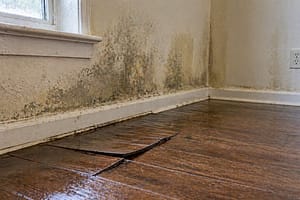
Those subtle signs show homeowners where they catch a problem early.
Additionally, if several small clues show up together, trust the pattern.
A slightly higher bill, faint staining, and a mild odor together usually mean more than any one sign.
That said, it also depends on the plumbing system and the building. Moreover, condensation on cold pipes can mimic a leak in humid climates. Additionally, a roof leak can stain ceilings the same way a plumbing leak does. However, shower door splashing can damage flooring around a bathroom without any pipe failure at all. Finally, good troubleshooting means keeping those possibilities in mind instead of jumping to the first conclusion.
When to monitor and when to act fast
A tiny drip under a sink gives you a little time, but not much.
If you know what you are doing, you can tighten a connection.
Additionally, you can replace a worn supply line.
However, if the leak is inside a wall, under a slab, above a ceiling, or near electrical wiring, delay costs.
Act fast if you notice active dripping. Additionally, watch for ceiling stains, stronger mold odor, warped flooring, or a meter that moves with no water. Furthermore, move quickly if the leak is near a water heater, panel box, or any finished area.
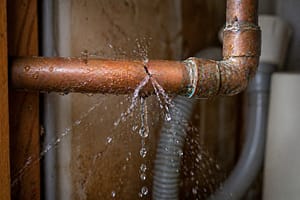
Shut off the local valve if the leak is isolated to one fixture. If you cannot control it, shut off the main water supply. Then drain the system by opening a faucet at the lowest point you can access. Finally decide whether this is a safe DIY repair or a job for a plumber.
The honest answer is that many homeowners can spot the warning signs.
However, finding the exact source is not always straightforward.
Water travels.
The wet spot is not always where the leak started.
That is where field experience and proper leak detection tools make a big difference.
How to Tell if a Pipe Is Leaking Behind a Wall or Under the Floor
When the leak is hidden, you are usually working backward from symptoms. Listen for water movement when fixtures are off. Check the meter. Scan for staining, odor, soft drywall, warped trim, and changes in flooring. Compare rooms that share plumbing walls. Additionally, kitchens, bathrooms, and laundry spaces often leak into adjacent areas before the source becomes visible.
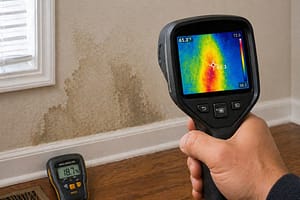
First, if you suspect a hidden leak, avoid tearing into multiple areas too quickly. Moreover, random demolition often creates more repair work than the leak itself. Then, start with the strongest evidence and the simplest access point. Finally, if that does not confirm the source, it may be time for professional leak detection.
Indeed, At Ainstheplumber, this is exactly where practical troubleshooting matters most. However, the goal is not just to find water. It is to find the actual failure point. Then fix it before cosmetic damage turns into a larger structural problem.
First, a leaking pipe does not always look urgent on day one. Consequently, that is why so many expensive plumbing calls begin with a stain that people meant to check later. Therefore, if something looks off, test it now while the problem is still small enough to control.
Recommended Tools & Plumbing Guide
As a plumber with over 20 years of experience, I’ve seen how the right tools can make the difference.
Additionally, they can prevent a quick fix from turning into major damage.
I’ve put together a list of trusted plumbing tools.
Leak detection products help homeowners catch problems early and protect their homes.
👉 Browse my recommended tools and products here
📘 Get my practical plumbing guide.

Indeed, Ainsworth Dickenson is your go-to plumbing expert.