A dripping faucet at midnight feels urgent.
Therefore, DIY plumbing solutions for common household problems help.
However, DIY Plumbing Solutions for Common Household Problems are often within reach.
Additionally, they are within reach for many homeowners.
You can succeed when you know what to look at, have the right tools, and understand where the repair ends.
Additionally, toilets and sinks usually have a small valve on the supply line near the fixture.
Therefore, for any burst pipe, failed water heater, or isolated leak, use the main shutoff valve.
Moreover, every property owner should know where it is and test it occasionally.
Still, a shutoff valve that has not moved in years may not work when you need it most.
Additionally, this guide covers DIY plumbing solutions for common household problems.
DIY Plumbing Solutions for Leaks and Drips

A dripping faucet
A faucet that drips once every few seconds wastes more water than most people expect.
Additionally, the repair is often simple.
For DIY plumbing solutions for common household problems, the correct replacement depends on faucet style.
Cartridge, ball, compression, and ceramic-disc faucets all seal differently.
Start by shutting off the hot and cold supply valves under the sink. Plug the drain before removing anything small, then take off the handle and inspect the cartridge, O-rings, washers, or seals. On a compression faucet, a worn rubber washer is often the culprit. On many newer single-handle faucets, replacing the cartridge is more reliable than rebuilding individual seals.
Take the old part with you when buying a replacement. Faucet parts can look nearly identical while being just different enough not to fit. Once reassembled, turn the water back on slowly and check both the faucet and the cabinet below for leaks.
If water is coming from the base of the faucet rather than the spout, the issue may be worn O-rings or a loose mounting nut. If the faucet body is cracked or heavily corroded, replacement is usually the better long-term decision.
A leak under the sink
Water under a kitchen or bathroom sink does not always mean a failed pipe.
Additionally, dry the area completely, place a few paper towels beneath the connections, and run water through the drain.
Then fill the sink partway and release it.
Thus, this test helps identify whether the leak appears at supply line, shutoff valve, drain tailpiece, P-trap, or sink strainer.
Hand-tightening a loose slip-joint nut may stop a drain leak.
Do not force it with pliers.
Plastic fittings crack easily, and overtightening can distort the washer that creates the seal.
If tightening does not work, remove the connection, and inspect the tapered washer.
Additionally, replace it if it is flattened, cracked, or installed backward.
A leak from a braided supply line, corroded shutoff valve, or damaged pipe calls for more caution. These parts are under water pressure, unlike a drain. Shut off the water and replace a damaged supply line rather than wrapping it with tape. Tape may hide the leak for a day, but it is not a reliable repair.
Clearing a Slow or Clogged Drain Safely
Typically, routine sink, tub, and shower clogs come from hair, soap residue, grease, or food debris near the drain opening. However, chemical drain cleaners are tempting, but they can damage older piping, create hazardous splashes, and complicate repairs. Start with mechanical cleaning instead.
For a bathroom sink or tub, remove visible hair and buildup from the stopper or drain opening. A plastic drain-cleaning strip can pull out a surprising amount of debris. Follow with hot water. For kitchen sinks, use hot water with dish soap for grease buildup, but avoid pouring boiling water into a sink with fragile plastic drain components.
If the drain is still slow, use a plunger sized for the fixture. A sink plunger needs enough water to cover the rubber cup. On a double-bowl kitchen sink, seal the second drain with a wet rag while plunging the first side. On a bathroom sink, block the overflow opening with a damp cloth to create pressure.
A small hand auger is useful when the clog sits beyond the trap. First, feed the cable gently, turning the handle instead of forcing it. Then pull it back slowly, clean the cable, and flush the line with water. If several fixtures drain slowly, the toilet gurgles, or water backs up in a tub. The blockage may be in a branch line. That is not the time to keep plunging. A professional inspection can prevent a backup inside the property. This is one example of DIY Plumbing Solutions for Common Household Problems.
Fixing a Running Toilet
A running toilet is one of the most common service calls because the sound is easy to ignore until the water bill arrives. Inside the tank, the problem is usually a flapper that does not seal, a fill valve that is out of adjustment, or a refill tube installed incorrectly.
Remove the tank lid and listen. If water flows into the overflow tube, the water level is too high, or the fill valve is failing. Adjust the float according to the valve design so the water stops about an inch below the top of the overflow tube. If the valve still runs after adjustment, replace it.
If the tank fills, stops, and then refills every few minutes, the flapper is likely leaking. Follow the EPA WaterSense guidance for a simple toilet dye test: put a few drops of food coloring in the tank and wait about 10 to 15 minutes without flushing. Color in the bowl confirms that water is slipping past the flapper. Replace the flapper with a compatible model, and make sure the chain has a little slack. A chain that is too short can hold the flapper open; one that is too long can catch beneath it.
Do not use a brick or other heavy object in the tank to reduce water use. It can crack the porcelain or interfere with moving parts. A properly adjusted modern fill valve is a safer fix.
When a Toilet Will Not Flush Properly
A weak flush is different from a true clog. If the bowl water rises and drains slowly, use a flange plunger with an extended rubber sleeve designed for toilets. Keep the plunger sealed over the outlet and use firm, controlled strokes. Avoid repeated flushing while the bowl is full because that is how bathroom floors get flooded.
If the toilet flushes but lacks force, check the small rim holes beneath the bowl edge. Mineral buildup can restrict water flow over time. Clean them carefully with a nonmetal tool and inspect the tank water level. Low tank water can reduce flushing performance.
A toilet that frequently clogs despite normal use may have an object lodged in the trap, a poor venting issue, or a drain-line problem. A closet auger is safer than a standard snake because it protects the porcelain. If the auger does not clear the issue, stop before damaging the bowl or pushing the obstruction farther into the line.

Water Heater Warning Signs You Should Not Ignore
Some water heater maintenance is homeowner-friendly. You can look for moisture around the base, inspect visible connections for corrosion, and test whether the temperature setting is reasonable. The U.S. Department of Energy recommends a 120°F water-heater setting for many households to help reduce energy use and scalding risk.
But a water heater leaking from the tank itself is generally not repairable. Rust-colored water, popping sounds from sediment, a failing temperature and pressure relief valve, or water around gas connections deserve professional attention. Never cap or plug a temperature and pressure relief valve. That valve is a critical safety device, not a nuisance part.
For electric and gas water heaters, shut off the power or fuel supply before attempting any inspection beyond a visual check. Water and energy sources leave no room for guesswork.
Know When DIY Stops Being the Smart Choice
The best repair is not always the one you can physically attempt. Call for professional help when you have a burst pipe, sewage backup, a hidden leak behind a wall, recurring drain backups, no water pressure throughout the property, or signs of water near electrical equipment. The same applies when a repair requires opening walls, soldering or modifying water lines, or working on gas piping.

For property managers and owners in Sint Maarten, small leaks deserve quick attention because moisture can travel through concrete structures, ceilings, and shared walls before it becomes visible. Ainstheplumber’s field experience comes down to a simple rule: investigate the source, not just the symptom. Replacing a stained ceiling tile without finding the leak above it only delays the damage.
Keep a basic plumbing kit with a flange plunger, sink plunger, adjustable wrench, tongue-and-groove pliers, bucket, towels, flashlight, replacement flappers, and a few common washers. More importantly, write down your main shutoff location and keep it where everyone responsible for the property can find it. When water moves where it shouldn’t, calm action in the first few minutes protects your home better than any rushed repair.
Recommended Tools & Plumbing Guide
As a professional plumber with over 20 years of experience, I have seen how the right tools, reliable products, and regular maintenance can help homeowners identify plumbing problems early and prevent unnecessary damage.
Disclosure: This article contains affiliate links. If you purchase through one of these links, I may earn a commission at no additional cost to you. As an Amazon Associate, I earn from qualifying purchases.
⭐ Enjoy convenient shopping and delivery options—explore Amazon Prime benefits and eligibility. Availability and benefits may vary by location.
👉 Browse my recommended plumbing tools and products
🔧 Visit my Plumbing Solutions Store
Get My Practical Plumbing Guide
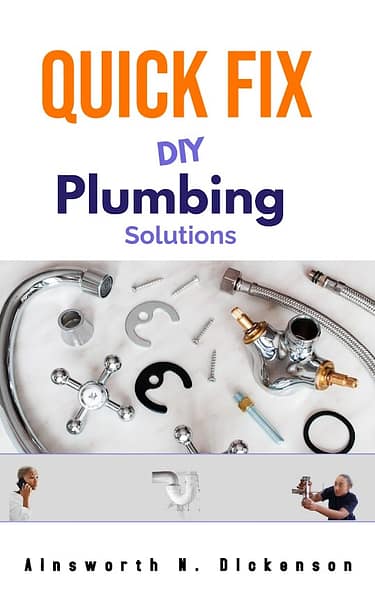
Build your plumbing knowledge and approach common household problems with greater confidence using Quick Fix DIY Plumbing Solutions.
Kindle Unlimited members may also read the eBook through their membership while it remains enrolled in KDP Select.
Ainsworth Dickenson
Professional Plumber & Author
AinsThePlumber