A sink starts dripping at 9 p.m., the toilet begins to clog right before guests arrive, or a shutoff valve refuses to budge when you need it most. That is when the best plumbing tools for homeowners stop being a nice idea and start being the difference between a quick fix and expensive water damage. You do not need a van full of pro gear, but you do need the right basics on hand before something goes wrong.
The smart approach is to build a small plumbing toolkit that helps you handle common issues safely. A good homeowner setup should let you stop leaks, clear simple clogs, tighten or loosen common fittings, and inspect hard-to-reach areas. It should also help you recognize the moment when a repair is getting beyond DIY territory.
What makes the best plumbing tools for homeowners?
The best tools are not always the most expensive ones. They are the ones you will actually use, can store easily, and can trust in a stressful moment. For most homeowners, that means tools that work across several plumbing jobs rather than specialized gear meant for daily trade use.
It also means thinking about your plumbing system. A homeowner in an older house with metal piping may need a heavier-duty wrench setup than someone in a newer home with mostly PEX and compression fittings. If you manage a rental or small commercial property, it also makes sense to keep duplicate basics so one clogged fixture does not slow down your response.
The core plumbing tools worth owning
1. A proper cup plunger and a flange plunger
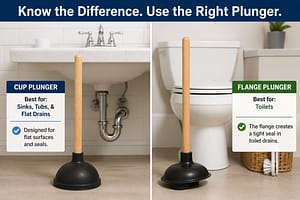
Most people own one plunger and hope it works everywhere. That is usually the first mistake. A cup plunger is best for sinks, tubs, and flat drains, while a flange plunger is designed for toilets. Using the wrong one often leads to poor suction and more frustration than progress.
If you buy only one first, make it a quality toilet plunger with a fold-out flange. But ideally, keep both. They are inexpensive, and they solve two of the most common plumbing problems a homeowner faces.
2. Tongue-and-groove pliers
These are one of the most useful plumbing tools in any house. They grip pipe, compression nuts, slip nuts, and stubborn fittings without requiring a full wrench set for every size. A medium pair handles many jobs, but a small and large pair together give you much more control.
The trade-off is that they can chew up finishes if used carelessly. Wrap a rag around decorative parts or use a smoother jaw tool when appearance matters.
3. Adjustable wrench
An adjustable wrench is a reliable choice for supply line nuts, shutoff valves, faucet connections, and other common fasteners. It is especially handy when you do not know the exact size you will need. For homeowners, one well-made adjustable wrench often gets more use than a large full-size wrench set.
That said, if the nut is soft brass or already worn, the wrong fit can round it off. Take a second to tighten the jaws snugly before turning.
4. Basin wrench
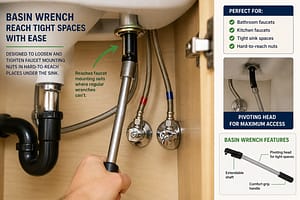
This is the tool many homeowners do not buy until after they have struggled under a sink for an hour. A basin wrench is made for reaching the mounting nuts behind faucets in tight sink cabinets where your hand and a regular wrench will not fit.
If you ever plan to replace a kitchen or bathroom faucet yourself, this tool can save your patience. It is not something you will use every month, but when you need it, there is no real substitute.
5. Hand auger or drain snake
For clogs beyond the trap or deeper in a branch drain, a hand auger is a better option than pouring chemical drain cleaner into the line. It physically breaks through or retrieves blockages and gives you a much better chance of solving the problem without damaging older pipes.
A small hand auger works well for sinks, tubs, and showers. Toilets are different. Use a toilet auger for toilets, not a standard cable snake, or you risk scratching the bowl.
6. Plumber’s tape and pipe joint compound
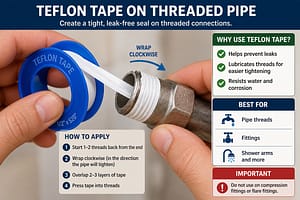
These are small supplies, but they fix a lot of headaches. Plumber’s tape is used on threaded connections to help seal them, while pipe joint compound is useful in certain threaded applications where a stronger sealing assist is needed.
The key is knowing that not every connection needs them. Compression fittings, for example, seal differently and usually do not rely on tape on the threads. More sealant is not always better. Used the wrong way, it can actually create leaks instead of stopping them.
7. Bucket, towels, and a small wet/dry vacuum
These may not look like plumbing tools, but any plumber who has worked inside occupied homes knows water control matters as much as the repair. A bucket under a trap, towels around a toilet base, or a wet/dry vacuum for an overflow can turn a messy situation into a manageable one fast.
If you have ever opened a cleanout or disconnected a trap without enough protection in place, you already know why these belong in the kit. They are part of doing the job cleanly and protecting cabinets, flooring, and walls.
8. Flashlight or headlamp
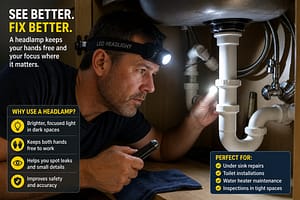
Most plumbing work happens in dark cabinets, behind toilets, around water heaters, or under sinks with poor lighting. A good flashlight helps, but a headlamp is often better because it keeps both hands free.
It is a simple upgrade that improves accuracy. You are less likely to cross-thread a fitting, miss a hairline drip, or fumble with a shutoff valve when you can actually see what you are doing.
9. Shutoff key or meter key, where applicable
Some homeowners know where the main shutoff is but cannot operate it quickly. In some setups, especially at the meter or curb stop, you may need a shutoff tool or meter key. If that applies to your property, do not wait until an emergency to find out.
This is one of those tools that may never get used, but if a pipe bursts, it becomes the most valuable tool you own. Check your system in advance and make sure everyone responsible for the property knows where the shutoff is.
10. Tubing cutter
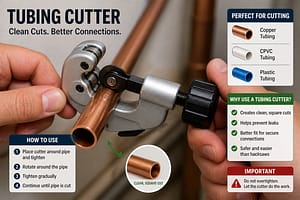
If you are replacing small sections of copper, CPVC, or certain plastic supply lines, a tubing cutter gives you a clean, controlled cut. That matters because rough cuts can lead to poor connections and future leaks.
For occasional DIY work, a compact cutter is usually enough. Just match the cutter to the material and size you are working on. Not every cutter handles every pipe type equally well.
11. Non-contact moisture meter or leak detection basics
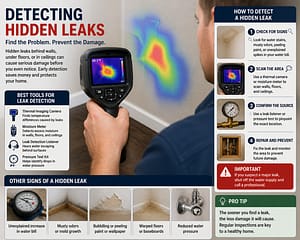
This one is not mandatory for every homeowner, but it is increasingly worth having if you have dealt with hidden leaks before. A moisture meter can help confirm whether a stain is active, whether a cabinet base is drying, or whether a suspected leak is spreading into nearby materials.
It will not replace professional leak detection, especially for slab leaks or concealed line issues, but it can help you make faster decisions. For homeowners trying to protect walls, flooring, and cabinetry, early confirmation matters.
Tools that are useful, but not always necessary
There is a difference between useful and essential. A pipe wrench, for example, is a classic plumbing tool, but many homeowners do not need one right away unless they are working on threaded metal pipe. A deburring tool, inspection mirror, and pressure gauge can also be helpful, but they are usually second-round purchases after you have covered the basics.
The same goes for powered drain machines. They can be effective, but they also create risk. Used incorrectly, they can damage fixtures, scratch porcelain, or worsen a blockage. For most homeowners, manual tools are the safer choice.
How to choose quality without overspending
Start with the jobs you are most likely to face. If you have older faucets, buy the basin wrench. If your home has slow drains, prioritize a proper plunger and a hand auger. If you have dealt with emergency shutoff issues before, solve that first.
You do not need contractor-grade everything, but avoid the cheapest version of frequently used tools. Pliers that slip, plungers that do not seal, and adjustable wrenches with sloppy jaws tend to fail right when pressure is highest. Spend a bit more on the tools that control water, clear clogs, and protect fittings.
Storage matters too. Keep everything together in one bin or tool bag, and include spare washers, a few common supply line seals, gloves, and old rags. In plumbing, speed matters. You do not want to hunt through a garage while water keeps spreading.
When the right tool is still not enough
Good tools make small repairs easier, but they do not replace judgment. If a shutoff valve will not close, a leak is inside a wall, a drain keeps backing up, or you are dealing with a water heater, sewer smell, or recurring pressure issue, that is usually the point to stop and get experienced help.
That is not a failure. It is how you avoid turning a repair into a restoration project. The best homeowners are not the ones who do everything themselves. They are the ones who know how to respond early, use the right tools well, and call a professional before the damage gets expensive.
A well-built plumbing toolkit gives you confidence, but more importantly, it gives you time. Time to stop water, limit damage, and make a smart decision before a small issue becomes a major one.
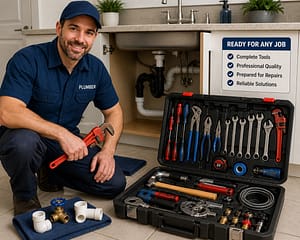
Recommended Tools & Plumbing Guide
As a plumber with over 20 years of experience, I’ve seen how the right tools can make the difference between a quick fix and major damage. I’ve put together a list of trusted plumbing tools and leak detection products that homeowners can use to catch problems early and protect their homes.
👉 Browse my recommended tools and products here
📘 Get my practical plumbing guide:
https://www.amazon.com/dp/B0F9ZZJCJG
— Ainsworth Dickenson
Your Go-To Plumbing Expert