
Disclosure: As an Amazon Associate, I may earn from qualifying purchases.
If you are deciding between PEX versus copper plumbing, the wrong choice usually shows up later – in repair costs, water quality complaints, or frustration during installation. I have seen homeowners focus only on material costs, only to be surprised by noise, corrosion, freezing damage, or a remodel that became harder than it needed to be.
The better way to compare these two systems is to look at how the pipe will perform in your house, with your water, your climate, and your budget. PEX and copper can both do the job well. The smart pick depends on what matters most to you.
PEX versus copper plumbing at a glance
PEX is a flexible plastic water supply pipe. Copper is a rigid metal pipe that has been used in homes for decades. Both are approved for potable water in many jurisdictions, and both can deliver a reliable plumbing system when installed correctly.
Where they differ is in cost, installation style, long-term behavior, and tolerance for real-world conditions. PEX is usually easier and cheaper to install. Copper has a longer track record and handles UV exposure and exterior conditions better. Neither one is automatically better in every home.
Cost is usually the first deciding factor

If your main goal is to keep project costs down, PEX usually wins.
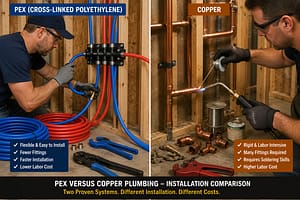
The pipe itself is often less expensive, but the bigger savings usually come from labor. PEX can snake through framing with fewer fittings, which means less cutting, less soldering, and less time on the job. On a full repipe, that difference adds up quickly.
Copper costs more as a material, and installation is more labor-intensive. Every change of direction or branch often requires a fitting. The work also demands more skill and more time. If you are hiring a plumber, labor costs can make copper substantially more expensive than PEX.
That said, cost should not be viewed in isolation. A cheaper installation is not a better installation if the material is a poor fit for the property. I have seen owners save money upfront and lose it later when the water chemistry or sun exposure made the original choice less ideal.
Installation: PEX is easier, copper is more demanding
This is where most DIY homeowners notice the biggest difference.
PEX is flexible, lightweight, and forgiving in tight spaces. It is easier to route through walls and ceilings, especially in remodels. Depending on the system, connections are made with crimp, clamp, expansion, or push fittings. That still requires proper tools and good technique, but it is generally more approachable for beginners than copper soldering.
Copper requires cutting, cleaning, fitting, and usually soldering with a torch. That means more precision and more risk if you do not know what you are doing. Poor solder joints can leak. Working around framing, insulation, and finished surfaces also brings fire risk if proper precautions are not followed.
For a skilled plumber, copper is routine work. For a homeowner doing limited plumbing, PEX is usually the easier path. That is one reason it has become so common in newer work and repipes.
Durability depends on what kind of stress the system sees
People often ask which pipe lasts longer, but that question is too broad to answer honestly without context.
Copper has a strong reputation because it has been around for a long time. When water conditions are favorable and the installation is done well, copper can last for decades. But copper is not invincible. Aggressive water, low pH, high velocity, poor grounding conditions, or poor workmanship can lead to pinhole leaks and corrosion.
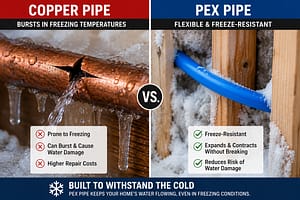
PEX resists scale buildup and is not vulnerable to the same type of internal corrosion. It also has a little give, which helps in freezing conditions. If water freezes in a copper line, the pipe is more likely to split. PEX can sometimes survive a freeze better, though fittings may still fail, and no pipe should be treated as freeze-proof.
PEX does have weaknesses. It should not be left exposed to sunlight for extended periods because UV light degrades it. It can also be damaged by rodents in some homes, and it may not be the best choice where physical abuse or exposed installation is likely.
Water quality and taste can influence the decision

This part gets overlooked, but it matters.
Copper is often preferred by homeowners who want a traditional pipe material with a long history in drinking water systems. Some people simply trust metal more than plastic, especially for potable water. Copper does not have the same concerns about plastic-related taste or odor that some people report with new PEX installations.
PEX, on the other hand, performs very well in many water conditions where copper struggles. If your water is acidic or otherwise corrosive, copper may develop problems faster than expected. In that case, PEX may be the better long-term choice.
If water quality is a concern, testing your water before a major repipe is money well spent. This is one of those decisions where guessing can get expensive.
PEX versus copper plumbing for hot water lines

Both materials can be used for hot water, but they behave differently.
Copper handles heat very well and has a solid track record on hot water lines. It is rigid, stable, and familiar to plumbers working around water heaters and mechanical rooms.
PEX is rated for hot water, too, but it expands and contracts more than copper. That means proper support and installation matter. If it is poorly fastened, you may hear movement or ticking as the line heats and cools. That does not always mean failure, but it can be annoying.
PEX also insulates slightly better than copper, so it can help reduce heat loss in some runs. Copper transfers heat more readily, which can be a benefit or a drawback depending on the layout.
Noise, appearance, and exposure matter more than people expect
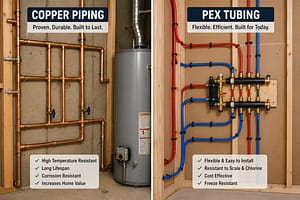
Copper has a cleaner, more traditional appearance when piping is exposed. In mechanical rooms, utility areas, or visible installations, some owners prefer how it looks. It also handles exterior and exposed applications better, provided local codes and conditions permit its use.
PEX is usually better hidden behind walls and ceilings than left on display. It is functional, not decorative. In exposed areas, it can look temporary even when it is installed correctly.
Noise can go either way. Copper can produce the familiar ticking and expansion sounds, especially on hot lines. PEX is often quieter in general use, but poor support can still cause rubbing or movement noise.
When copper makes more sense
Copper is often the better choice when the piping will be exposed, when UV exposure is unavoidable, or when you want a material with a long, proven history and are comfortable paying more for it.
It also makes sense in certain commercial or high-abuse settings where rigid pipe is a better fit. If the local water chemistry is favorable and the work is being done by an experienced installer, copper can be an excellent long-term system.
There is also a resale and perception factor. Some buyers hear “copper plumbing” and immediately see it as a premium feature. That is not always based on the whole picture, but it does affect decision-making.
When PEX makes more sense
PEX is often the better choice for repipes, remodels, slab-to-attic reroutes, and projects where budget matters. It is especially useful when access is limited, and you need to route pipe through existing framing with minimal disruption.
It also makes sense in homes with water conditions that are tough on copper. If freeze resistance is a concern, PEX offers an advantage, though proper insulation and pipe protection still matter.
For many homeowners, PEX hits the sweet spot of affordability, speed, and dependable performance. That is why so many modern plumbing systems use it.
The real answer: match the pipe to the property
The best decision is rarely based on a single feature. A high-end custom home with exposed utility runs may justify copper. A cost-conscious repipe in an older house may clearly favor PEX. A home with corrosive water may push the choice away from copper, even if the owner likes the idea of a metal pipe.
If you are planning a full installation or repipe, ask a few practical questions. Is the pipe going to be exposed to sunlight? Has the home had corrosion issues before? Are you trying to limit labor costs? Is this a DIY repair, a full remodel, or a long-term investment in the property?
That is how experienced plumbers make the call in the field. Not by chasing a one-size-fits-all answer, but by looking at the conditions the pipe has to live with.
If you are still weighing PEX versus copper plumbing, think less about which material sounds better and more about which one solves your actual problem with the fewest future headaches. Good plumbing is not about winning an argument. It is about installing a system that you do not have to worry about every time you turn on the water.
Recommended Tools & Plumbing Guide
As a plumber with over 20 years of experience, I’ve seen how the right tools can make the difference between a quick fix and major damage. I’ve put together a list of trusted plumbing tools and leak detection products that homeowners can use to catch problems early and protect their homes.
👉 Browse my recommended tools and products here
📘 Get my practical plumbing guide:
https://www.amazon.com/dp/B0F9ZZJCJG
— Ainsworth Dickenson
Your Go-To Plumbing Expert