A sink that suddenly holds water signals a problem. A shower that drains around your feet signals trouble. A toilet that threatens to overflow makes a small clog feel like a major emergency.
The good news is you can learn How to handle blockage. This knowledge helps you avoid a flooded cabinet, damaged fixture, or an expensive service call.
The key is knowing what kind of blockage you have. Use the right tool for that location, and recognize when DIY should stop.
Start by Reading the Symptoms
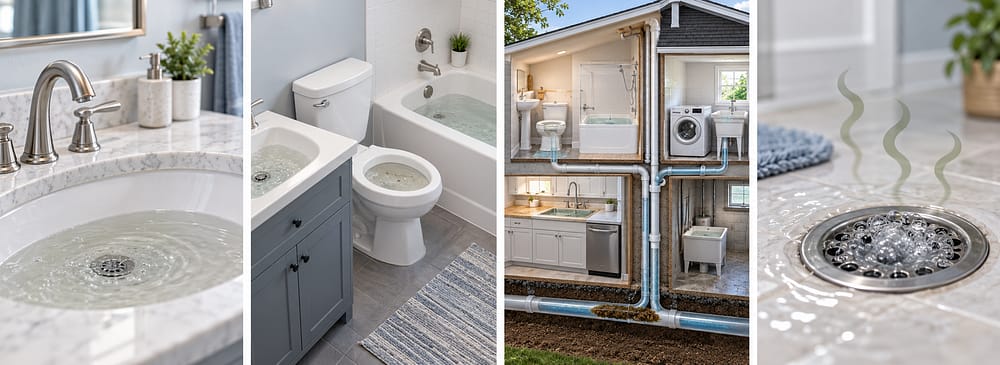
Check which fixtures show a blockage before you reach for a drain cleaner or a plunger. One slow bathroom sink usually points to a local blockage near that fixture. Hair, toothpaste residue, soap scum, and small items dropped down the drain are common causes.
If a sink, tub, and toilet in the same bathroom are all draining slowly, the problem may be farther down the branch line. When several fixtures throughout the home are backing up, gurgling, or draining poorly, suspect the main sewer line instead, How to handle blockage.
That is not the moment to keep forcing water through the system. Stop using water-heavy appliances, including the dishwasher and washing machine, until the cause is identified. If you continue to run these appliances, you may push the blockage further and worsen backups.
Odors matter too. A sour or sewage-like smell can mean standing waste inside the line, while gurgling often means air is being trapped behind a developing blockage. These signs do not automatically mean a major sewer failure, but they do tell you the clog is beyond a simple surface buildup. You can learn more about identifying these symptoms in my guide to home drain problems and their simple solutions.
How to Handle Pipe Blockages Like a Pro: Begin Safely
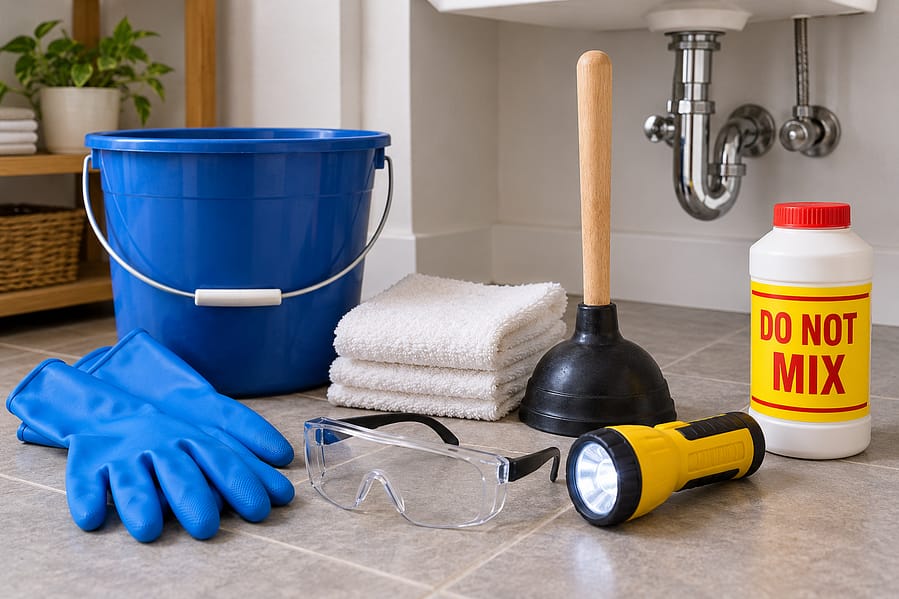
A professional starts by controlling the risk. Put on gloves, clear items from beneath the sink, and keep old towels and a bucket nearby. If the fixture is close to overflowing, shut off the local water supply if possible. For a toilet, remove the tank lid and close the flapper if water continues rising. The shutoff valve behind the toilet can also stop the flow.
Do not mix drain chemicals, even if the first product did not work. Mixing products can create dangerous fumes or heat. Strong chemical cleaners can also damage older pipes, weaken seals, and make the drain unsafe for the person who eventually has to open it. In real plumbing work, chemical-filled lines are a frequent source of injuries and difficult repairs. How to handle blockage
Hot water has a place, but it is not a cure-all. A sink draining slowly because of grease may improve with hot water and dish soap, especially if you catch the issue early. Never pour boiling water into a porcelain toilet or a fragile sink, and do not use it if you suspect a plastic pipe connection is already loose or compromised.
Match the Tool to the Drain
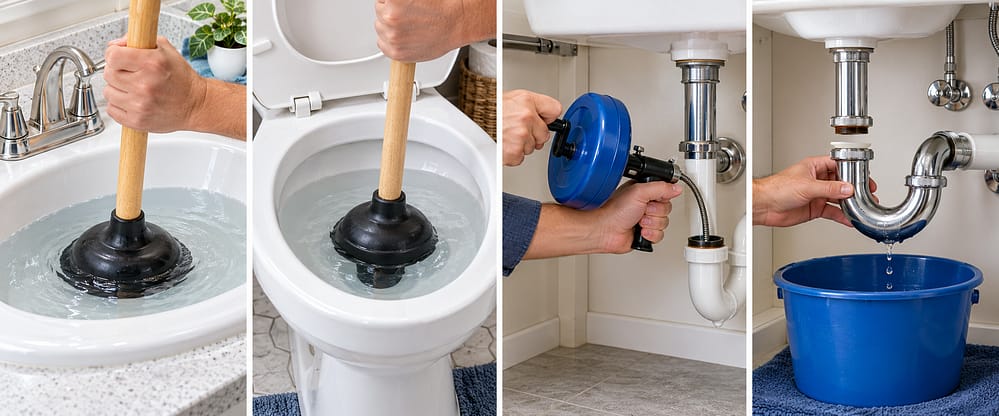
The right tool works with the plumbing system instead of fighting it. A good cup plunger is made for sinks, tubs, and showers. A flange plunger is designed for toilets. They are not interchangeable if you want good suction.
For a sink or tub, block the overflow opening with a wet rag before plunging. This forces pressure toward the clog rather than allowing air to escape through the overflow. Add enough water to cover the plunger cup, then make several firm, controlled strokes. Do not use wild force. The goal is to create alternating pressure and suction that loosens the obstruction.
If plunging does not solve a sink clog, remove and clean the stopper first. Bathroom sink stoppers often collect a thick mass of hair and soap just below the drain opening. This is one of the easiest fixes homeowners miss because the blockage is hidden from view.
For a bathroom sink, kitchen sink, or laundry sink, the P-trap is the next accessible point. Place a bucket under the curved section of pipe, loosen the slip nuts by hand or with adjustable pliers, and lower the trap carefully. Clean out the debris, inspect the washers, and reinstall the trap hand-tight before giving it a small additional turn. Overtightening plastic fittings can crack them or distort the washer.
A hand-crank drain snake is useful when the blockage sits beyond the trap. Feed the cable slowly into the wall pipe, turning the handle as you go. If it catches, do not yank it back immediately. Rotate, ease it forward, and work through the obstruction. Pull the cable out slowly and clean it as it comes back. Then reassemble the pipe and test with a moderate flow of water.
Treat Kitchen and Toilet Clogs Differently
Kitchen lines have their own personality. Grease is often the main troublemaker, especially when cooking oil, pan drippings, butter, or fatty food scraps go down the drain. Grease may leave the sink quickly while warm, then cool and stick to the pipe farther down. Coffee grounds, rice, pasta, eggshells, and fibrous foods can add to the buildup.
For additional prevention guidance, read How to Safely Dispose of Kitchen Grease.
If a kitchen sink is clogged, start with the plunger and then inspect the trap. If you have a garbage disposal, turn off its power at the switch and breaker before investigating. Never put your hand inside the disposal. Use the manufacturer-supplied wrench or the manual turn feature underneath the unit if it is jammed.
Toilets need a different approach. Use a flange plunger and make sure it seals tightly in the bowl outlet. Give it time—15 to 20 deliberate strokes are more effective than three rushed pushes. If the clog remains, use a closet auger, which is made to pass through the toilet’s curved internal trap without scratching porcelain.
Do not force a standard drain snake into a toilet. It can damage the bowl and may not make the bend correctly. If a child’s toy, wipes, a hygiene product, or another solid object is involved, an auger may retrieve it, but repeated forcing can push it farther into the line.
Know When the Blockage Is Beyond DIY
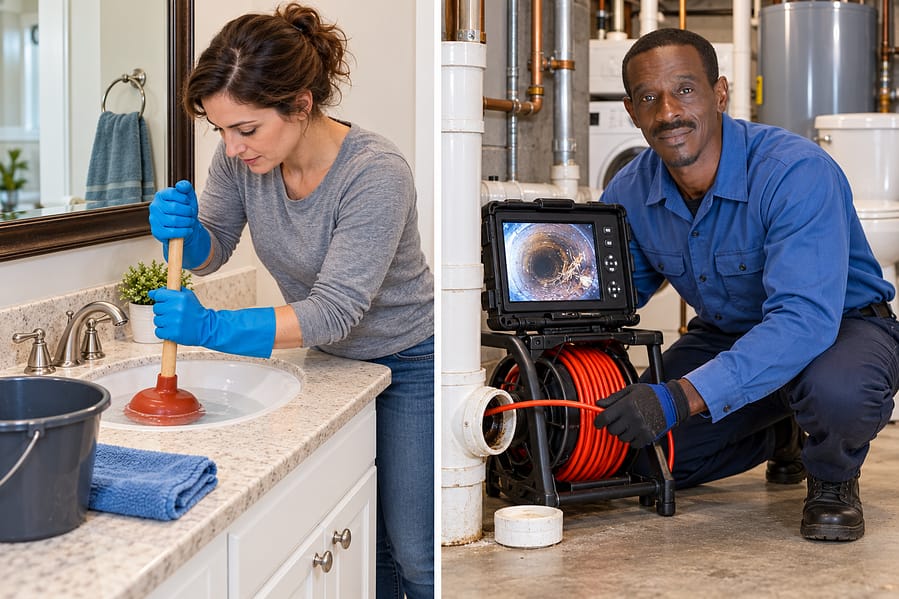
There is a clear difference between a manageable fixture clog and a drainage problem that needs professional equipment. Call a plumber when sewage backs up into a tub or shower, multiple drains are affected, water appears around a floor drain, or a toilet backs up when another fixture is used. Those symptoms can indicate a main-line blockage, roots in the sewer line, a collapsed pipe, or a venting issue.
You should also call for help if you have already removed the trap, cleaned the stopper, plunged correctly, and used a hand snake without improvement. Continuing to attack the line can loosen fittings, damage pipes, or hide the true source of the problem. A professional can use larger cable machines or a camera inspection to see whether the issue is grease buildup, roots, scale, a broken pipe, or an object lodged deep in the system.
For property managers and commercial operators, recurring clogs deserve quick attention even when they eventually clear. A repeat blockage in the same area often points to a developing line problem rather than bad luck. AinsThePlumber sees this often in properties where an older drain line has buildup that gradually narrows the pipe until normal use causes another backup.
Prevent the Next Blockage
The best drain repair is the one you never need. Use hair catchers in showers and tubs, empty sink stoppers regularly, and keep grease, wipes, and food scraps out of drains. Only toilet paper and human waste belong in a toilet, regardless of what a package says about flushability.
Run water after using a garbage disposal, but do not treat it like a food grinder for every leftover on a plate. In bathrooms, clean visible hair before it reaches the drain. These small habits protect the narrow points in your plumbing system where clogs usually begin.
A blockage is your plumbing system asking for attention. Address the issue promptly with controlled methods, and seek help before a slow drain becomes a damaging backup.
Recommended Tools & Plumbing Guide
As a professional plumber with over 20 years of experience, I have seen how the right tools, reliable products, and regular maintenance can help homeowners identify plumbing problems early and prevent unnecessary damage.
Disclosure: This article contains affiliate links. If you purchase through one of these links, I may earn a commission at no additional cost to you. As an Amazon Associate, I earn from qualifying purchases.
⭐ Enjoy convenient shopping and delivery options—explore Amazon Prime benefits and eligibility. Availability and benefits may vary by location.
👉 Browse my recommended plumbing tools and products
🔧 Visit my Plumbing Solutions Store
Get My Practical Plumbing Guide
Build your plumbing knowledge and approach common household problems with greater confidence using Quick Fix DIY Plumbing Solutions.
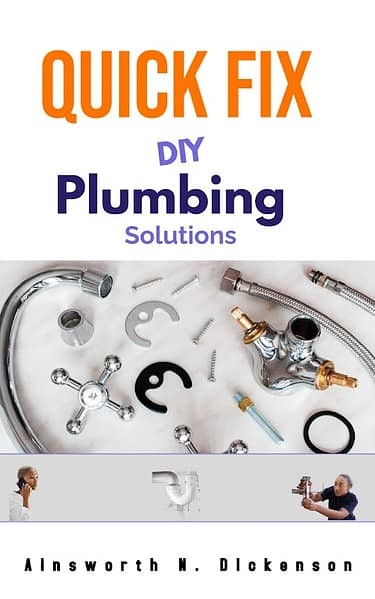
Kindle Unlimited members may also read the eBook through their membership while it remains enrolled in KDP Select.
Ainsworth Dickenson
Professional Plumber & Author
AinsThePlumber