
❄️ What Temperature Do Pipes Freeze?
Most people assume pipes only freeze in extreme cold—but that’s not always the case.
👉 Pipes can begin to freeze at 32°F (0°C)
However, the real danger usually starts when temperatures drop below:
👉 20°F (-6°C) or lower
At this point, pipes are at a much higher risk of freezing, especially if they are exposed to cold air.
⚠️ Why Pipes Freeze Faster Than You Think
Even if the outside temperature is just below freezing, pipes can still freeze quickly depending on:
- Lack of insulation
- Wind exposure
- Poor heating inside the home
- Pipe location
👉 Pipes don’t need extreme cold—just the right conditions.

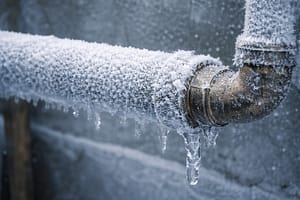
👉 Alt Text: Exposed pipes in a cold basement at risk of freezing
🏠 Pipes That Freeze First
Some pipes are more vulnerable than others.
Watch these areas closely:
- Pipes along exterior walls
- Under kitchen and bathroom sinks
- Crawl spaces and basements
- Attics with poor insulation
- Outdoor faucets and hose bibs
👉 These areas lose heat faster and freeze first.
💨 The Role of Wind Chill and Air Leaks
Cold air entering your home can drop the temperature around pipes very quickly.
Even small gaps can:
- Let cold air in
- Lower pipe temperature
- Increase freezing risk
👉 This is why sealing gaps is just as important as insulation.

🧠 How Long Does It Take for Pipes to Freeze?
In very cold conditions (below 20°F / -6°C):
👉 Pipes can freeze in as little as 4 to 6 hours
Especially if:
- There is no insulation
- The area is exposed
- Water is not moving
🚨 Signs Your Pipes May Be Freezing
Watch for early warning signs:
- Little or no water flow
- Frost on visible pipes
- Strange smells from drains
- Unusual noises when turning faucets
👉 Catching these early can prevent a burst pipe.
💡 Simple Ways to Reduce Risk
Even without advanced tools, you can lower your risk:
✔ Keep your home warm (above 55°F / 13°C)
✔ Open cabinets to allow warm air to circulate
✔ Let faucets drip during freezing nights
✔ Seal any visible gaps
👉 Small actions make a big difference.
🔥 Final Thoughts
Pipes don’t need extreme cold to freeze—just the right conditions.
Understanding temperature risks helps you:
✔ Act early
✔ Prevent damage
✔ Avoid costly repairs
🔓 Want Advanced Protection Methods?
If you want to go beyond the basics and learn:
✔ Exact temperature danger zones for different pipe types
✔ How professionals predict freezing risks
✔ Advanced protection strategies for extreme climates
👉 Join the community: https://patreon.com/AinsThePlumber
Educate yourself with more helpful blog posts: https://ainstheplumber.com/
See the helpful and straight-to-the-point plumbing book: https://www.amazon.com/dp/B0F9ZZJCJG
– Ainsworth “AinsThePlumber” Dickenson
Professional Plumber | Author of Quick Fix DIY Plumbing Solutions
Helping You Solve Plumbing Problems with Confidence