Disclosure: As an Amazon Associate, I may earn from qualifying purchases.
A dripping faucet can waste far more water than most homeowners expect, but the bigger concern is what you cannot see: a slow leak under a sink, a toilet that runs overnight, or a water heater beginning to corrode. A simple plumbing maintenance guide for every household gives you a routine for catching these problems while they are still small, affordable repairs instead of an emergency call.
You do not need a truck full of tools or advanced trade skills to protect your plumbing system. You need a few regular checks, good habits around drains, and the judgment to know when a problem has moved beyond a DIY fix.
Start With the Water You Can See
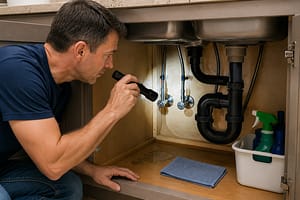
Once a month, walk through your home with plumbing in mind. Open the cabinet below every sink and look at the shutoff valves, supply lines, drain connections, and cabinet floor. Run both hot and cold water while you watch. A few drops at a fitting may look minor, but repeated moisture can swell cabinets, feed mold, and damage flooring.
Check around toilets as well. Look for moisture at the base, discoloration on nearby flooring, or a loose toilet that shifts when gently pressed from side to side. A toilet should sit firmly on the floor. If it rocks, do not keep tightening bolts until something cracks. The issue may be loose hardware, but it can also be a failed seal or a damaged floor beneath the fixture.
Pay attention to faucet handles and shower controls. Stiff handles, dripping spouts, or water coming from behind an escutcheon plate are early signs that a cartridge, washer, or valve component needs attention. Replacing a worn part is usually manageable when you can shut off water locally. If there is no working fixture shutoff or the valve itself leaks, it is time for a professional repair.
Use Your Water Meter to Find Hidden Leaks
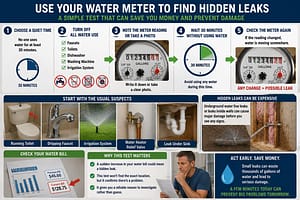
Your water meter is one of the best leak-detection tools already available to you. Choose a time when no one needs water for at least 30 minutes. Turn off faucets, avoid flushing toilets, pause the dishwasher and washing machine, then note the meter reading or take a clear photo.
Check it again after the waiting period. If the reading changed, water is moving somewhere. Start with the usual suspects: a running toilet, dripping faucet, irrigation system, water heater relief valve, or visible leak under a sink. If you cannot identify the source, do not ignore it. An underground water line leak or a leak inside a wall can cause expensive damage long before it becomes visible.
A sudden increase in the water bill is another reason to perform this test. It does not prove where the problem is, but it gives you a reliable reason to investigate rather than guess.
Keep Drains Clear Without Damaging Pipes
Most drain problems build slowly. Water begins taking longer to leave a sink or shower, then hair, soap residue, grease, or debris finally creates a full blockage. The best maintenance is keeping the wrong material out of the system in the first place.
Use a hair catcher in showers and tubs, and clean it regularly. In the kitchen, scrape food into the trash before washing dishes. Grease, oil, and fat should go into a disposable container, not down the drain. They may flow away while hot, but they cool inside the piping and collect other debris.
Avoid relying on harsh chemical drain cleaners. They can be rough on older pipes, seals, and fixtures, and they often fail to remove the real obstruction. If a drain is slow, first clean the stopper or strainer, then try a proper plunger. A hand auger can help with a simple hair clog in a sink or tub drain. Stop if you meet hard resistance, if multiple fixtures are backing up, or if sewage is coming up through a drain. Those signs may point to a deeper line blockage.
Treat Garbage Disposals With Care
A garbage disposal is not a second trash can. Fibrous vegetables, coffee grounds, pasta, rice, bones, grease, and large amounts of food can jam the unit or create clogs farther down the line. Run cold water before and during use, then allow the water to run briefly after the disposal is off.
If it jams, turn off the power at the switch and verify it cannot start. Never put your hand into the disposal. Use the manufacturer-provided wrench underneath the unit if applicable, or call for help if you cannot safely clear it.
Test Toilets Before They Waste Water

A running toilet is one of the most common sources of silent water waste. Listen after flushing. The tank should refill and stop. If you hear intermittent refilling or a steady hiss, the flapper, fill valve, or water level may need adjustment or replacement.
For a basic leak test, place a few drops of food coloring in the toilet tank and wait 15 to 20 minutes without flushing. If color appears in the bowl, water is slipping past the flapper. This is often a straightforward repair, but use a replacement part that matches your toilet model. Universal parts work in many cases, not all cases.
Also inspect the toilet supply line and shutoff valve. These are small components with big consequences when they fail. If a braided supply line shows rust, fraying, swelling, or corrosion at the fittings, replace it promptly.
Give Your Water Heater Regular Attention
Your water heater deserves a visual check every few months. Look around the base for rust, moisture, or white mineral buildup. Check the connections above the tank and inspect the temperature-and-pressure relief valve discharge pipe. That pipe should point downward and end near the floor. It should not be capped or blocked.
If you have a tank-style heater, flushing sediment can improve performance and reduce noise, especially in areas with hard water. But this is not automatic advice for every old heater. A neglected tank with heavy internal corrosion may begin leaking after it is disturbed. If the tank is older, making popping sounds, or showing rust around the bottom, have it assessed before attempting a flush.
Set the water temperature with safety in mind. Around 120 degrees Fahrenheit works well for many households, reducing scald risk while still providing comfortable hot water. Homes with specific health needs may require a different setting, so use sound judgment.

Know Where the Shutoff Valves Are
Every responsible household member should know how to shut off water at the main valve. In a leak, minutes matter. Find the main shutoff before an emergency happens, make sure it turns, and keep the area accessible.
You should also know the individual shutoffs for toilets, sinks, washing machines, and water heaters. If a washing machine hose bursts, shutting off the nearby valves is faster and less disruptive than turning off water to the entire property.
Inspect washing machine hoses at least twice a year. Replace hoses that are cracked, bulging, rusty at the connection, or older than their recommended service life. Consider turning off the machine valves when leaving home for an extended trip, especially if the hoses are older or the laundry area is upstairs.

A Practical Plumbing Maintenance Guide for Every Season
Some checks are best handled on a schedule. Each month, inspect under sinks, listen for running toilets, and clean drain strainers. Every few months, examine the water heater, test the water meter for unexplained use, and look over appliance supply lines.
Before cold weather, protect exposed pipes in unheated spaces and disconnect outdoor hoses where freezing is possible. In warm coastal climates, freezing may not be the concern, but corrosion, mineral buildup, and high water use still deserve attention. Property managers should add vacant-unit inspections to the routine because an unnoticed leak in an empty unit can damage several spaces before anyone sees it.
Know When to Stop and Call a Plumber
DIY maintenance saves money when it prevents damage and handles simple tasks safely. It becomes expensive when a homeowner forces a stuck valve, overtightens a fitting, damages a drain line, or keeps using a fixture with an active leak.
Call a qualified plumber for repeated drain backups, low pressure throughout the property, water stains on ceilings or walls, sewer odors, unexplained meter movement, leaking water heaters, or any repair that requires opening walls or working on main water lines. These are not problems to watch for another week.
The goal is not to repair every plumbing issue yourself. It is to recognize trouble early, protect your home, and make the next decision with confidence. A few careful checks each month can save you from the kind of plumbing emergency that never arrives at a convenient time.

Recommended Tools & Plumbing Guide
As a plumber with over 20 years of experience, I’ve seen how the right tools can make the difference between a quick fix and major damage. I’ve put together a list of trusted plumbing tools and leak detection products that homeowners can use to catch problems early and protect their homes.
👉 Browse my recommended tools and products here
📘 Get my practical plumbing guide:
https://www.amazon.com/dp/B0F9ZZJCJG
— Ainsworth Dickenson
Your Go-To Plumbing Expert
