Disclosure: As an Amazon Associate, I may earn from qualifying purchases.
A pipe does not wait for you to finish searching videos, compare opinions, or figure out which valve does what. The plumbing book that helps you handle emergencies faster should give you one thing first: control. Control of the water, control of the immediate risk, and control of the decision about whether this is a safe DIY repair or a job for a plumber.
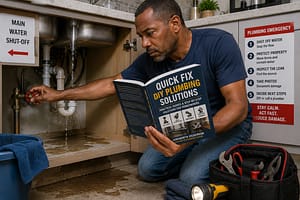
That is what separates a useful plumbing book from a collection of interesting tips. In a real emergency, you do not need a long history of plumbing systems. You need to know where the water is coming from, how to stop it, what not to touch, and what evidence to gather before damage gets worse.
Why speed matters in a plumbing emergency
Water damage rarely stays in one place. A small supply-line leak under a sink can soak a cabinet base, run into flooring, and create the conditions for mold before the visible puddle looks serious. A leaking toilet connection can damage the ceiling below. A failed water heater can release a large amount of water in minutes.
The first goal is not always repairing the failed part. The first goal is limiting loss. That usually means shutting off water at the fixture or at the main valve, moving belongings out of the area, and keeping electricity away from standing water.
A dependable plumbing reference helps you act in the right order. It also keeps you from making common mistakes, such as overtightening a fitting, using the wrong tape on a connection, or opening a drain line without having a container and protective gear ready.
What the plumbing book that helps you handle emergencies faster should teach first
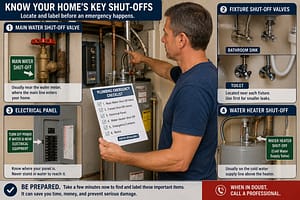
A practical emergency guide should begin with your home’s plumbing map. Every homeowner, renter with maintenance responsibility, and property manager should be able to identify the main water shutoff, fixture shutoffs, water heater shutoff, and electrical panel before a problem happens.
The main water shutoff is especially important. It may be near the water meter, in a utility room, garage, basement, crawl space, exterior wall box, or close to where the main line enters the building. Its location varies by property, so no book can find it for you. But a good one will tell you to locate it now, test it carefully, and label it clearly.
Fixture shutoffs are often the faster choice when a toilet, sink, washing machine, or refrigerator supply line is leaking. Closing the small valve serving that fixture lets the rest of the home keep running. If the local valve is corroded, will not turn, or continues leaking, shut off the main water supply instead.
The book should also explain when water and electricity create a higher-risk situation. If water is near outlets, appliances, a breaker panel, or exposed wiring, do not stand in water to investigate. Shut power off only if you can reach the panel safely from a dry area. When that is not possible, leave the area and call for qualified help.
A better emergency response sequence
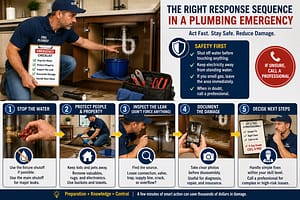
When water is actively leaking, the right sequence is simple, but it needs to become familiar before stress takes over.
First, stop the water. Use the fixture valve if it works and the leak is isolated. Use the main shutoff for a burst pipe, a major leak, or any situation where you cannot quickly identify the source.
Next, protect people and property. Keep children and pets clear of wet areas. Move rugs, electronics, boxes, and furniture if it is safe to do so. Place a bucket or pan under a controlled drip, but do not treat a bucket as a solution to an active leak.
Then, inspect without forcing anything. Look for the source: a loose supply connection, split hose, dripping valve stem, failed toilet fill valve, leaking trap, overflowing fixture, or pipe crack. Take clear photos before disassembling anything. Those photos help a plumber diagnose the issue and can be useful for a property manager or insurance claim.
Finally, decide whether the repair belongs in your hands. A loose compression nut under a sink may be manageable. A cracked pipe inside a wall, sewage backup, hidden leak, gas-water-heater issue, or repeated loss of water pressure needs professional attention. Fast action does not mean rushing into a repair beyond your experience.
The emergencies worth preparing for
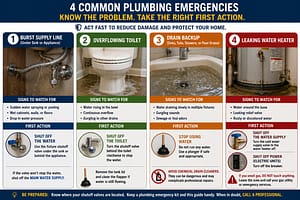
Not every plumbing emergency looks dramatic at first. A well-written book should cover the failures that homeowners actually encounter and explain the difference between a temporary measure and a repair.
Burst or leaking supply lines
Flexible braided supply lines, washing machine hoses, ice maker lines, and toilet connectors can fail with little warning. If a line splits, shut off the fixture valve immediately. If the valve will not close, use the main shutoff. Replacing a supply line can be a reasonable DIY job when the valve and connections are in good condition, but damaged threads, corroded valves, or water-stained walls are signs to stop and call a professional.
Overflowing toilets
An overflowing toilet calls for a quick response, not repeated flushing. Remove the tank lid and push the flapper closed if water is still flowing into the bowl. Then close the shutoff valve behind the toilet by turning it clockwise. A plunger may clear a simple clog, but do not keep plunging if wastewater is rising through a tub, shower, or another drain. That points to a larger drain blockage.
Drain backups
A slow sink is inconvenient. Sewage coming up through a shower drain is an emergency. Avoid chemical drain cleaners, especially if you may need professional drain service later. They can damage some piping, create dangerous splashing hazards, and complicate repairs. A plunger or hand auger can help with a localized, simple clog. Multiple affected fixtures usually mean the blockage is farther down the line.
Water heater trouble
Water around a water heater, a leaking temperature and pressure relief valve, rusty water, or a rumbling tank deserves attention. For a major leak, turn off the cold-water supply to the heater. For an electric unit, shut off power at the breaker before doing anything else. For a gas unit, do not attempt adjustments if you smell gas. Leave the area and contact the gas utility or emergency service provider.
Build the kit before you need it
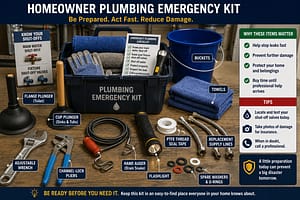
A plumbing book is more useful when it tells you what to keep on hand. You do not need a truck full of specialty tools. A basic emergency kit should include an adjustable wrench, tongue-and-groove pliers, a cup plunger, a flange plunger for toilets, a small hand auger, buckets, towels, gloves, a flashlight, and replacement washers or supply lines that match your fixtures.
Keep the kit where everyone responsible for the property can find it. Include a printed note with the main water shutoff location and the phone number of the person or plumbing service to call after hours. For rental properties and small commercial spaces, this is one of the simplest ways to reduce confusion and avoid costly delays.
There is a trade-off with DIY supplies. Stocking a few reliable basics helps you respond quickly. Buying unfamiliar repair parts just because they look close enough can create leaks, cross-threaded fittings, or repeated failures. Match thread type, size, and material before installing anything.
Why field experience makes the difference
Good plumbing guidance does more than say, “turn off the water.” It explains what happens next. A valve that has not moved in years may leak around its stem after you close it. A drain clog may be caused by buildup near the fixture, or it may be a warning that the main line is backing up. Water beneath a cabinet may come from the drain, the faucet supply, the dishwasher connection, or a leak hidden in the wall.
That practical judgment comes from seeing failures in real homes and commercial properties. At Ainstheplumber, the goal is to give property owners the same clear thinking used on a service call: contain the problem, identify the likely cause, avoid unnecessary damage, and choose the repair that will last.
A book cannot replace a plumber when the risk is high, but it can make you far more prepared when the unexpected happens. Learn your shutoffs while everything is dry, keep a few dependable tools nearby, and treat every small leak as useful information before it becomes a large repair bill.
Recommended Tools & Plumbing Guide
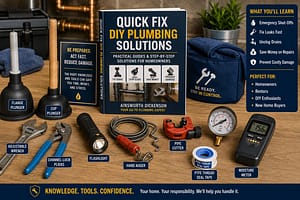
As a plumber with over 20 years of experience, I’ve seen how the right tools can make the difference between a quick fix and major damage. I’ve put together a list of trusted plumbing tools and leak detection products that homeowners can use to catch problems early and protect their homes.
👉 Browse my recommended tools and products here
📘 Get my practical plumbing guide:
https://www.amazon.com/dp/B0F9ZZJCJG
— Ainsworth Dickenson
Your Go-To Plumbing Expert